SAFEEL
Medical protector family to step confidently through live
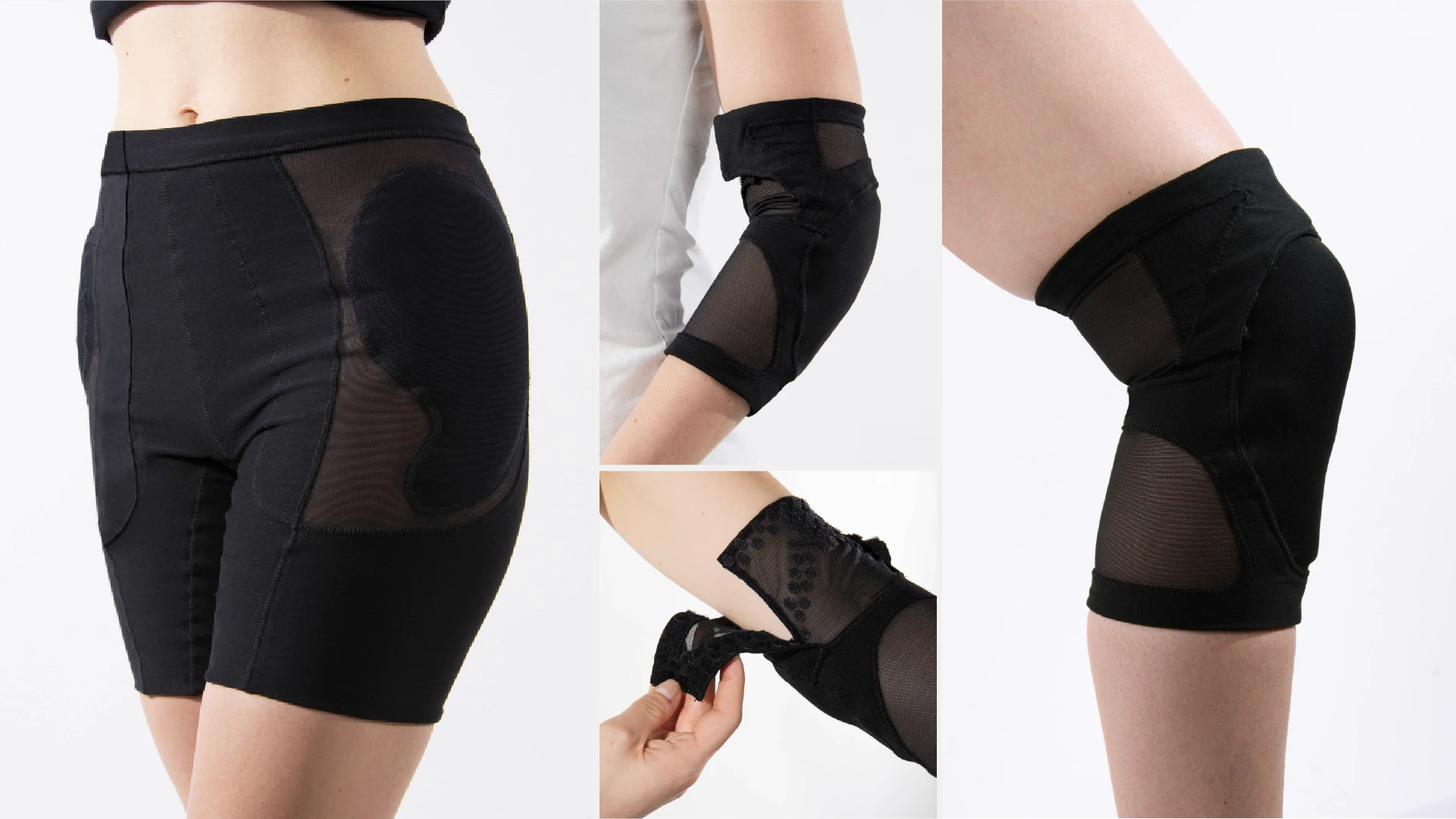
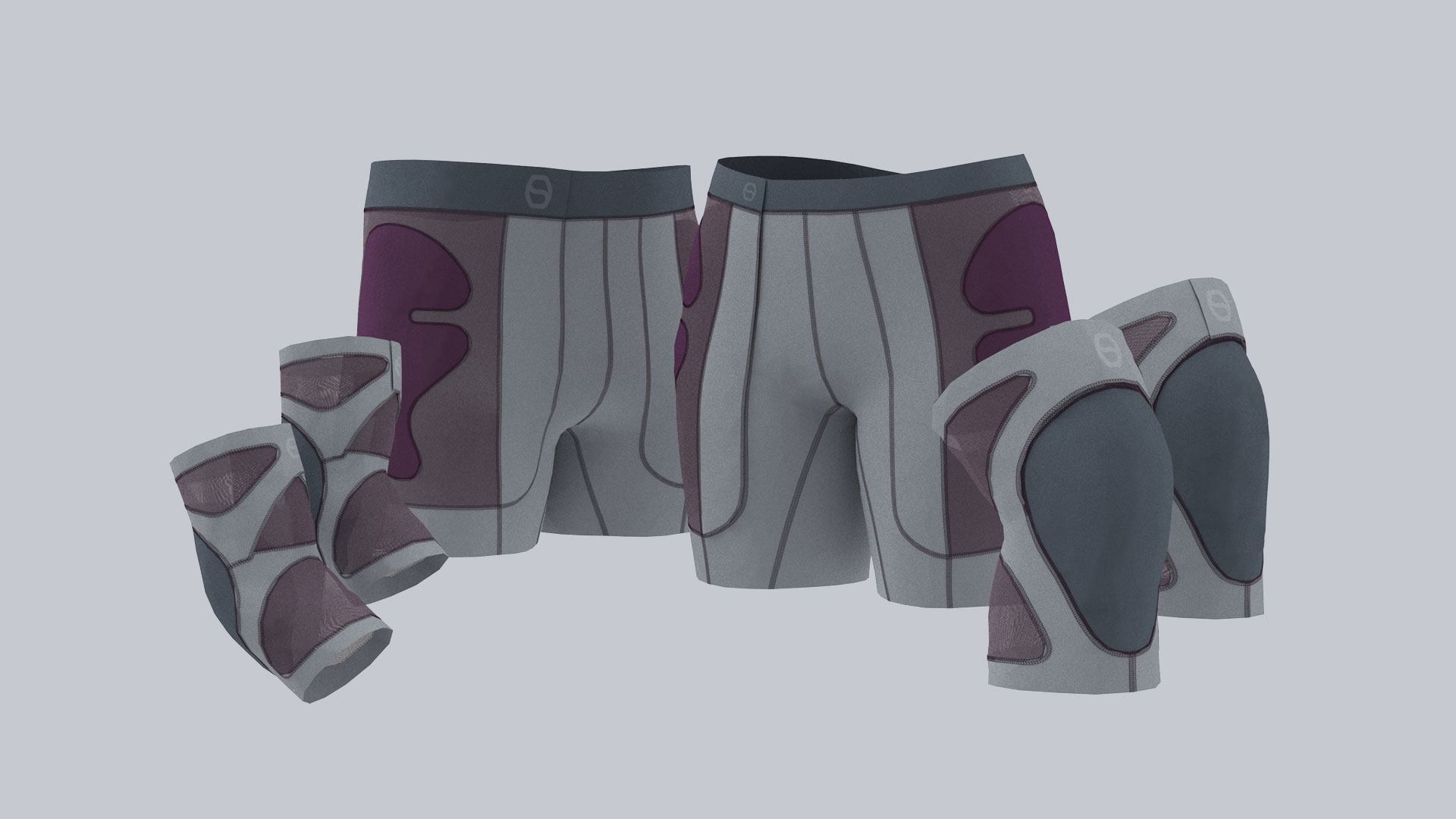
SAFEEL is a wearable protection product family that reduces injury risk from falls. It protects hips, knees, and elbows while enabling people with motor impairments to remain independent in everyday situations.
Timeline
2020 | 5 Months
Client
Bachelor Thesis Project
Role
Industrial Design, User Research
Tools
CLO 3D, Onshape, Keyshot, Adobe Suite
My Role
My friend and I developed SAFEEL as part of our bachelor thesis, working across research, concept development, and prototyping.
My focus was on understanding user needs and translating them into concrete product decisions, from material to construction choices.
Context
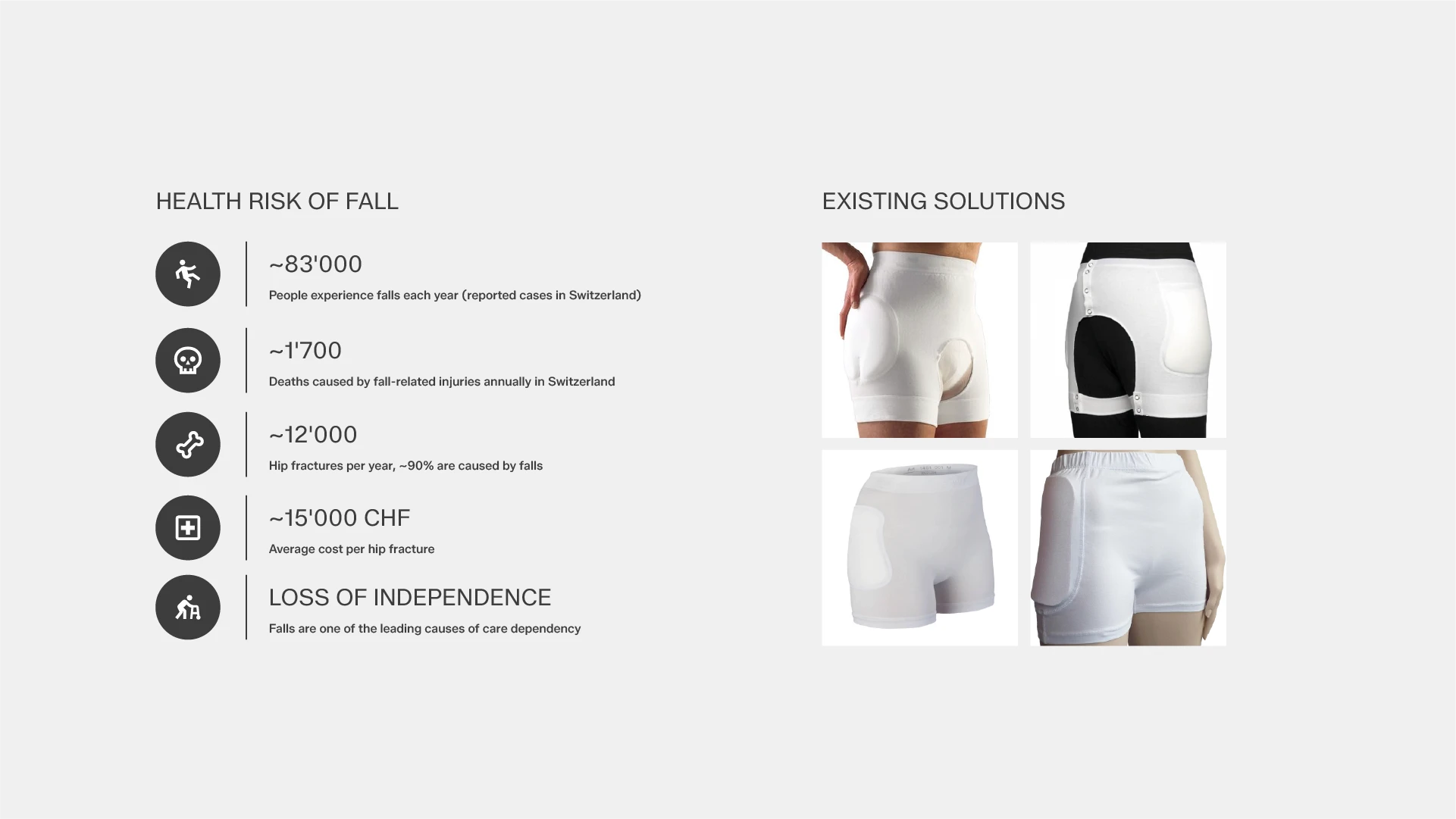
Falls are a major risk for elderly people and individuals with chronic conditions such as Parkinson’s disease or multiple sclerosis. Existing protector solutions primarily focus on hip protection and are often not used consistently in everyday life.
Beyond physical injuries, falls also impact confidence, mobility, and independence. Products in this space therefore need to address both protection and user acceptance.
Challenge
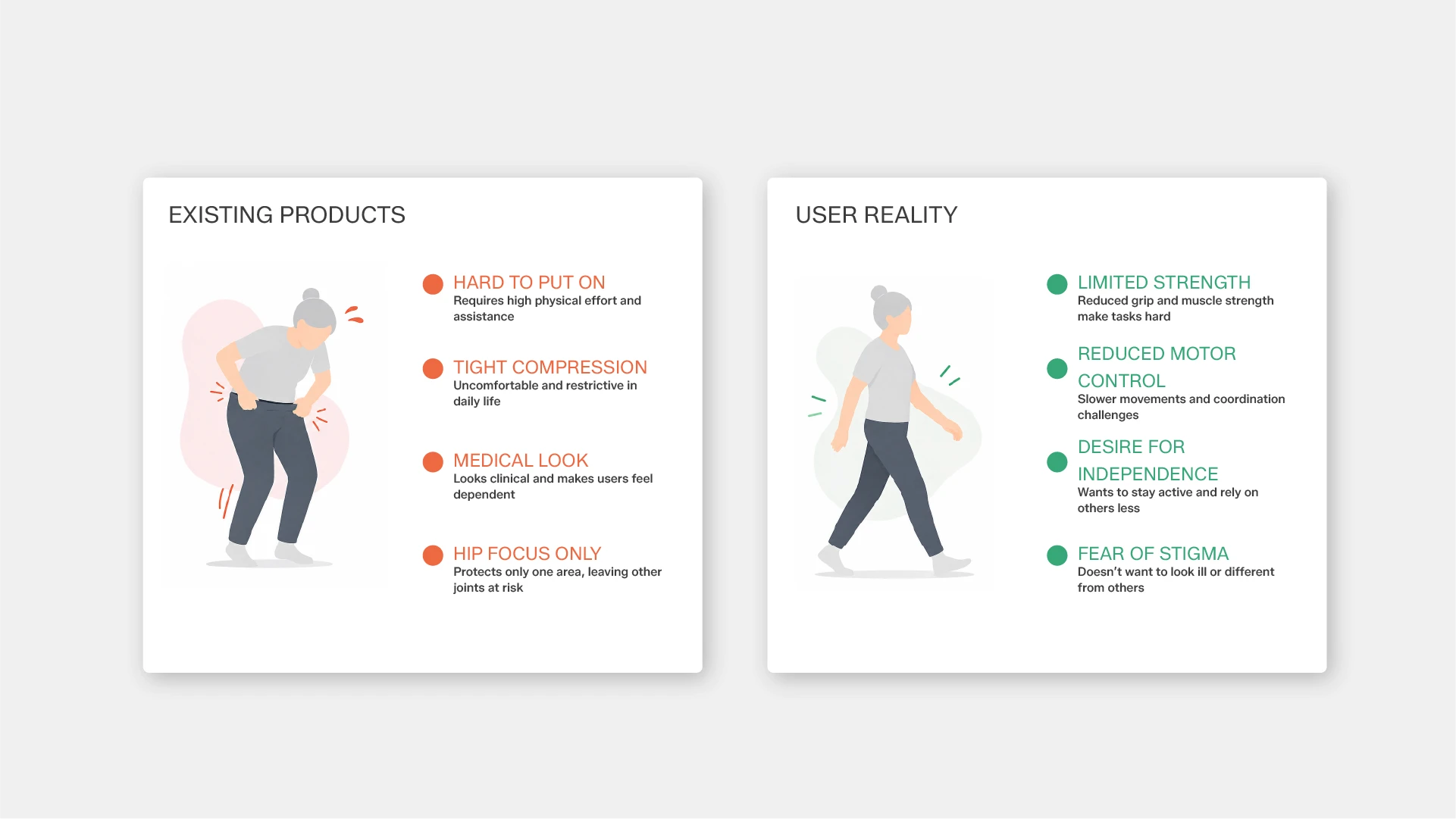
Designing a product that people are actually willing and able to use since existing protectors often fail because they require significant physical effort to put on and make users feel visibly medical or dependent.
At the same time, the product needed to provide reliable protection and support independent use for people with limited strength and motor control.
Approach
The project began with exploratory research in the healthcare context, including observations, expert interviews, and early user conversations.
Based on these insights, we focused on the perception of medical wearables and fall-related products. This informed both functional and visual requirements aimed at reducing barriers such as stigma and usability limitations.
Since this project was carried out during the COVID-19 pandemic, we had limited direct access to the target group. This required us to rely more on expert input and alternative validation methods for our iterative development and testing approach.
Process Insights
Shifting the focus from protection to independent use
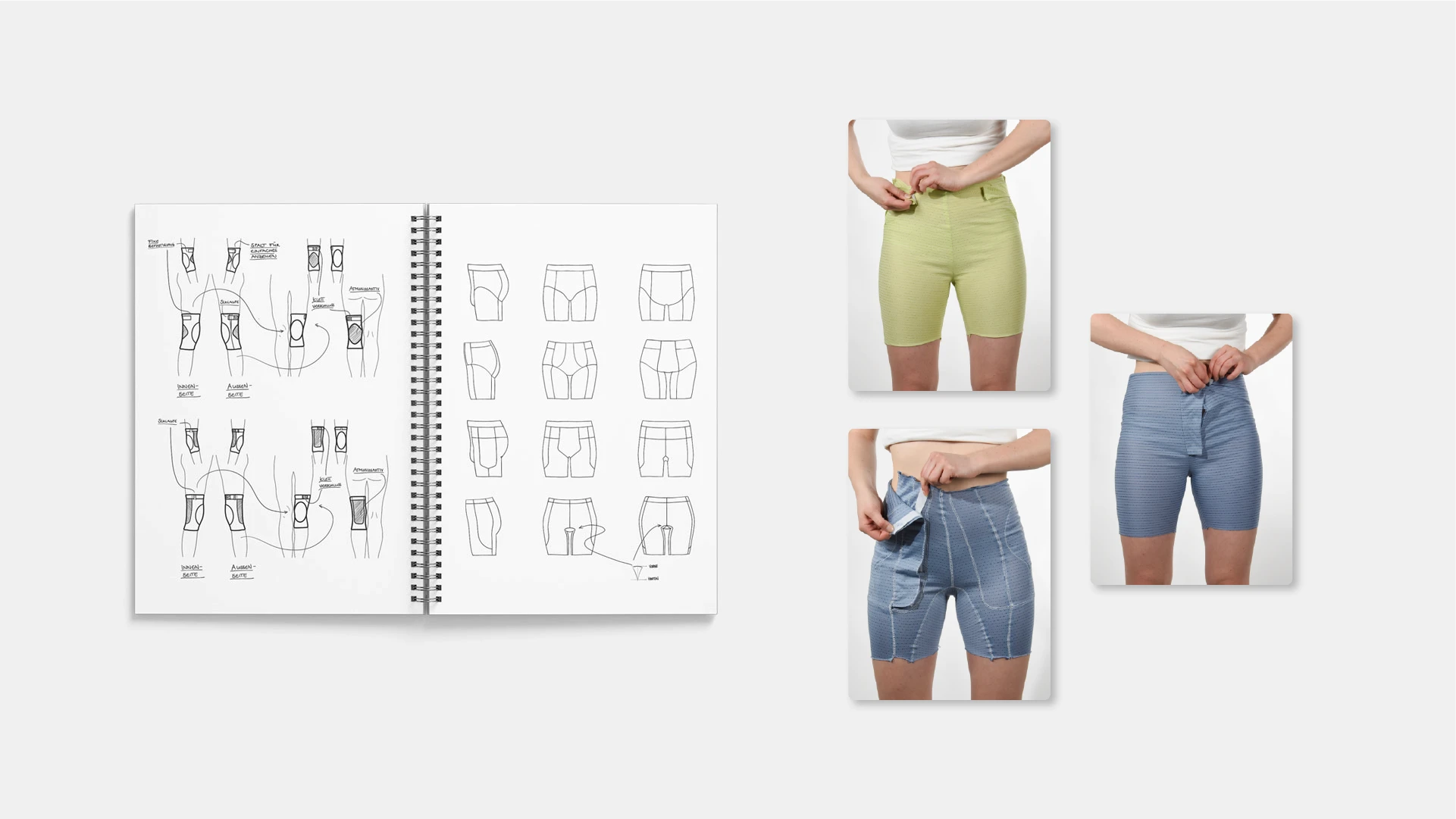
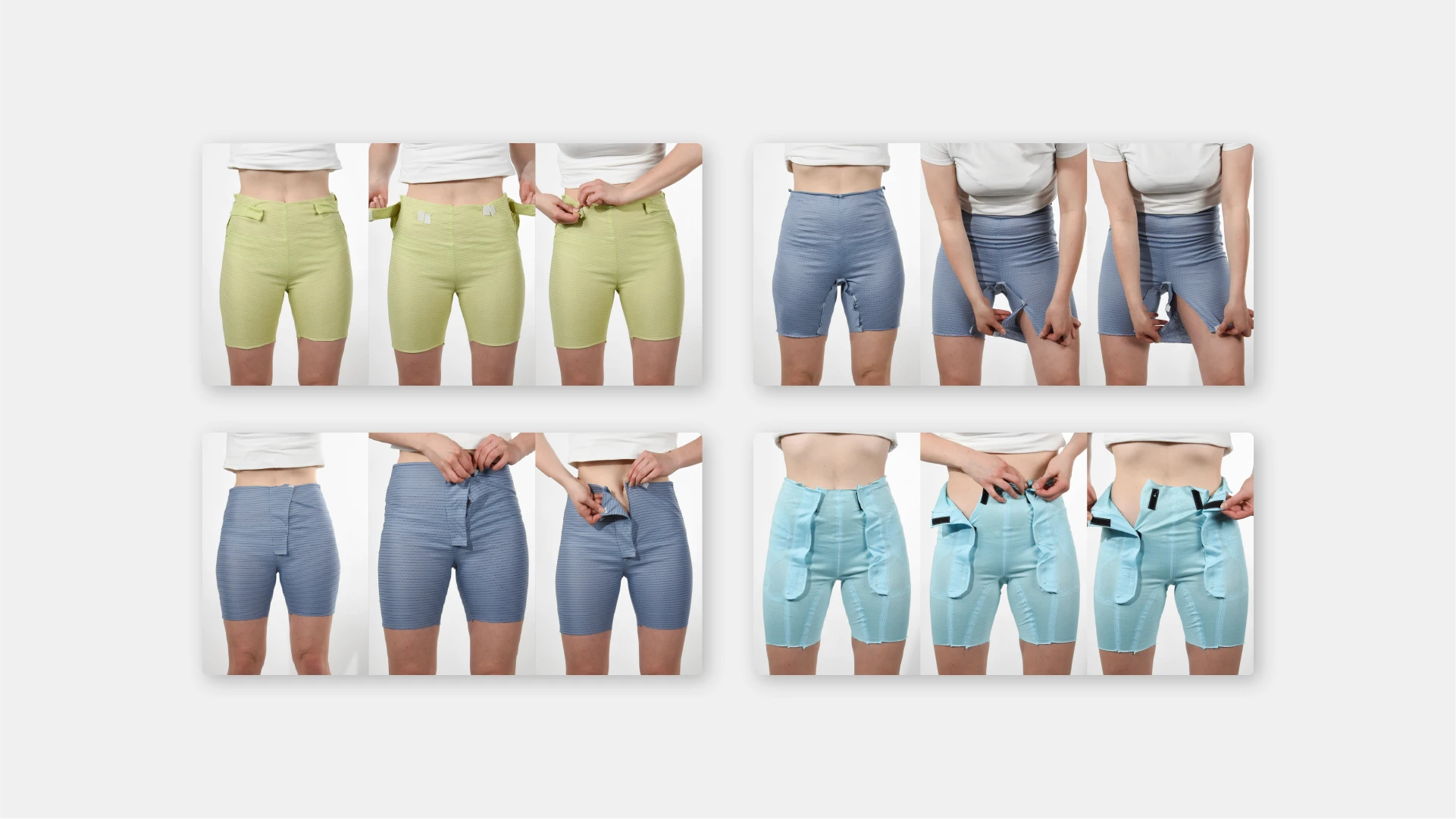
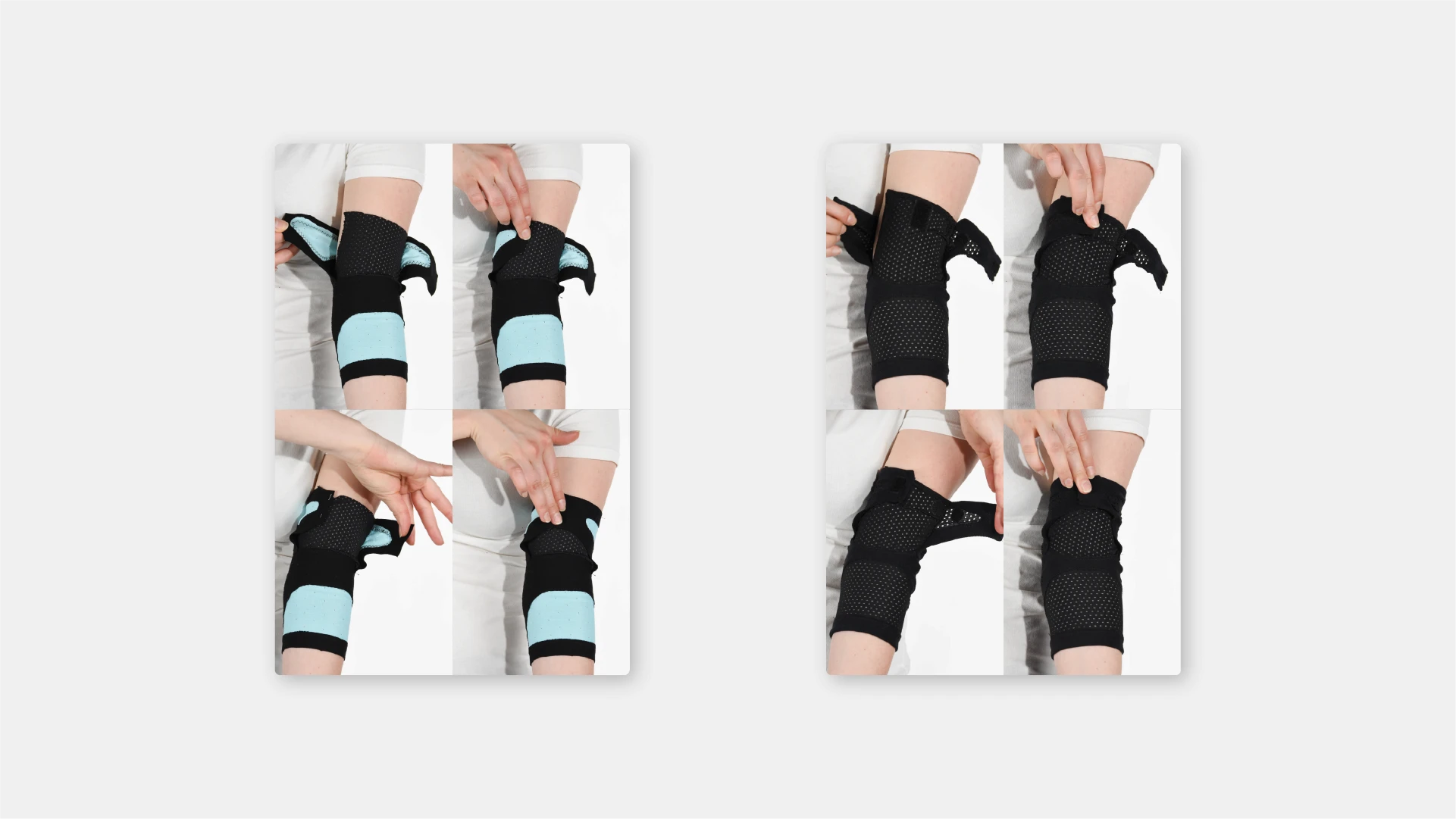
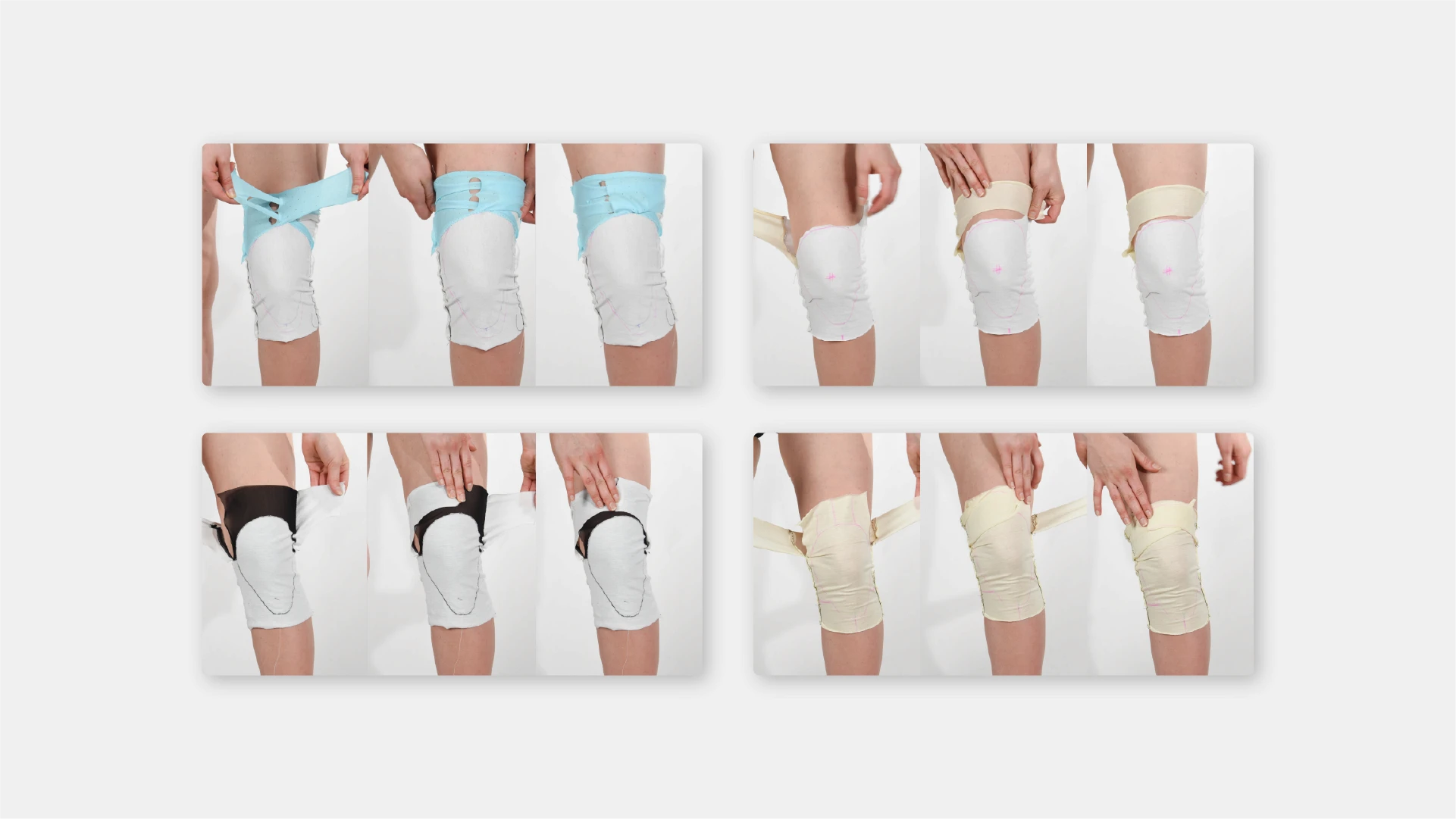
Protective products already exist but are often not used. The issue is not protection, but usability in everyday conditions. Users with limited strength struggle with tight, pull-on constructions. We addressed this by developing openable, flexible structures that reduce the effort required to put on and remove the protectors, enabling independent use.
Merge material and formfactor for comfrot
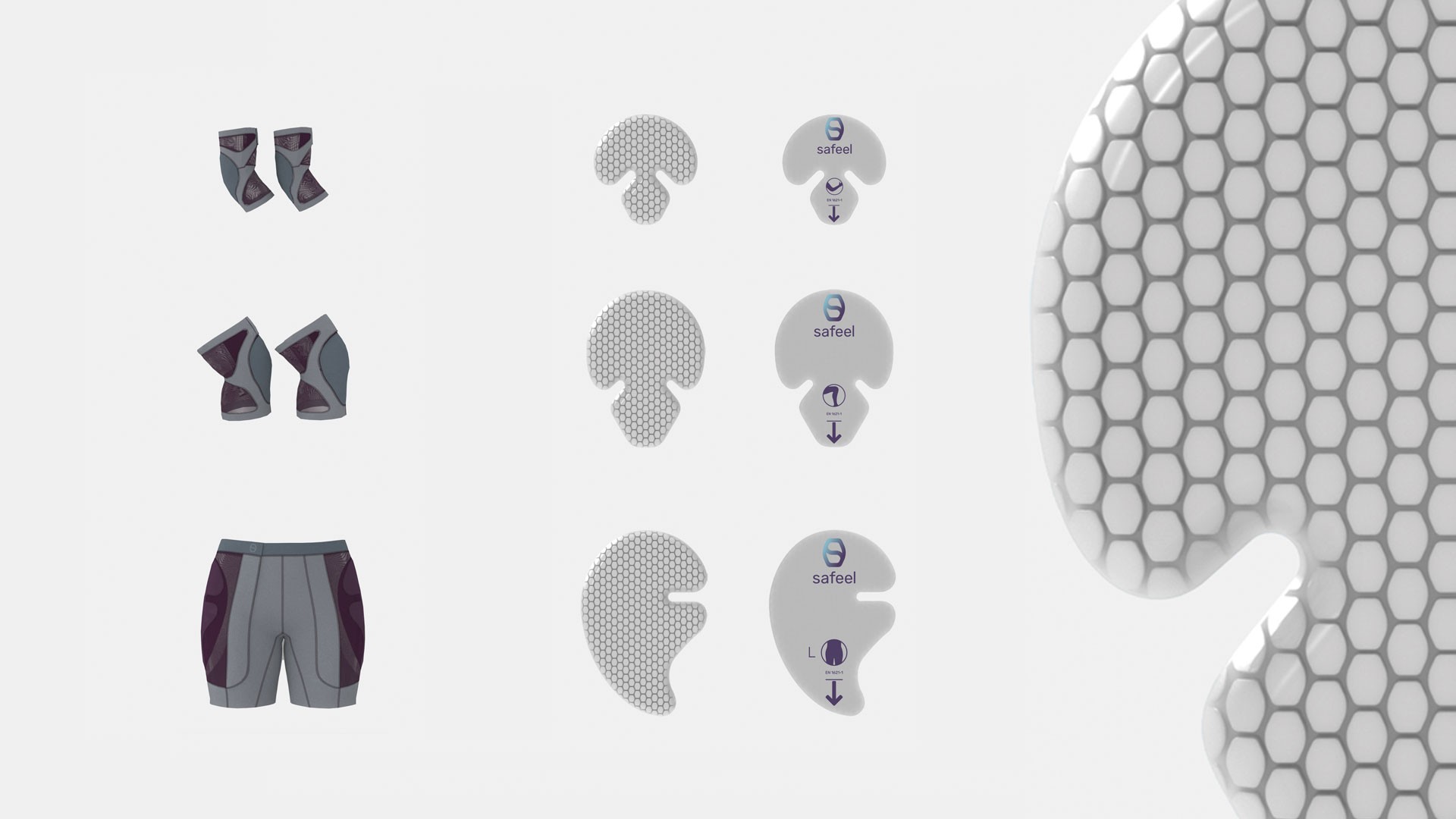
The protector pads are made from viscoelastic foam that is soft during wear and hardens on impact.
Through iterative testing, we developed a honeycomb structure combined with a teardrop geometry. This increases flexibility, allows the pads to adapt to body movement, and reduces resistance when putting on the product, while maintaining protective performance.
Designing appearance to reduce stigma
Users expressed concern about being perceived as ill or dependent.
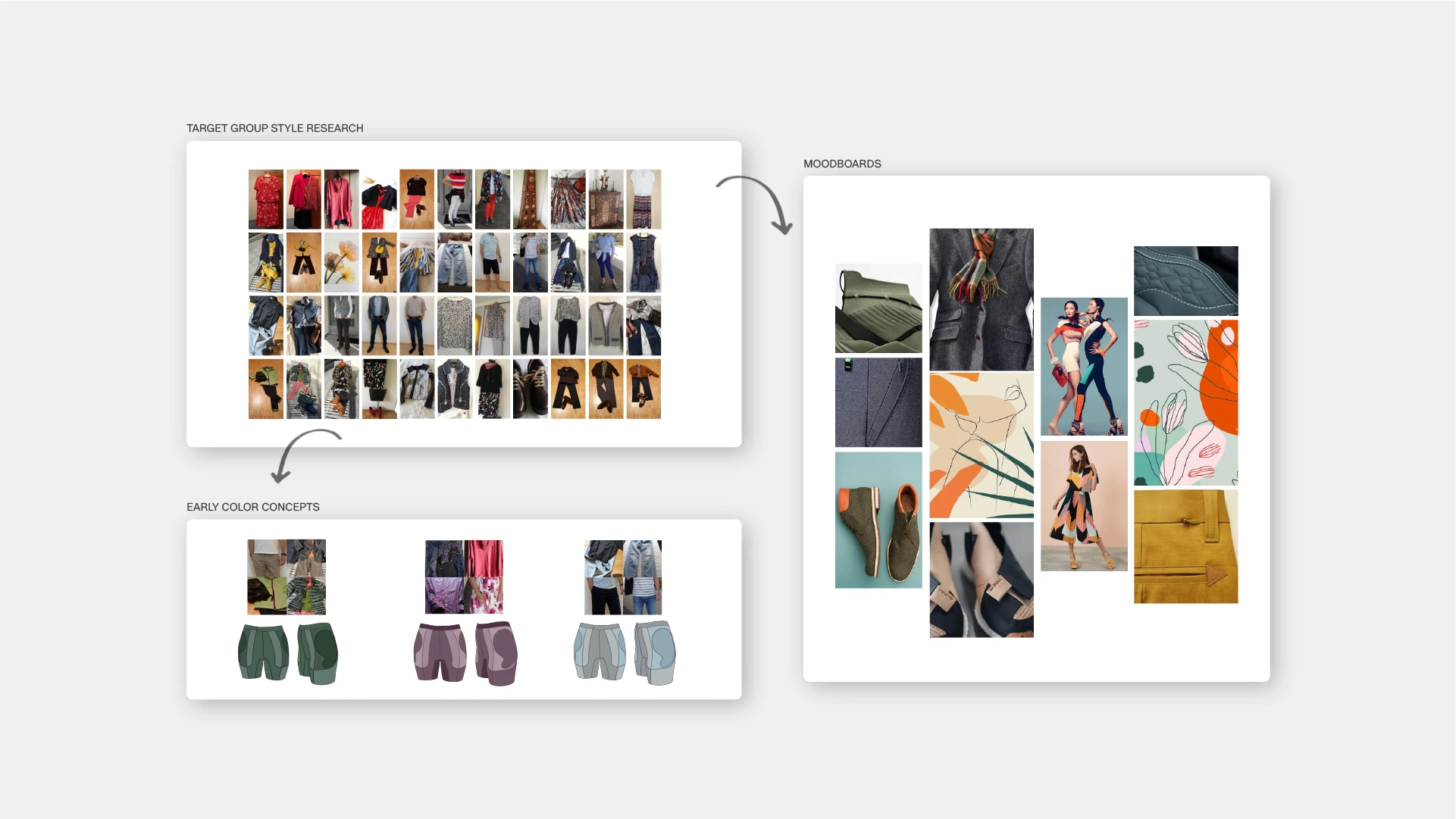
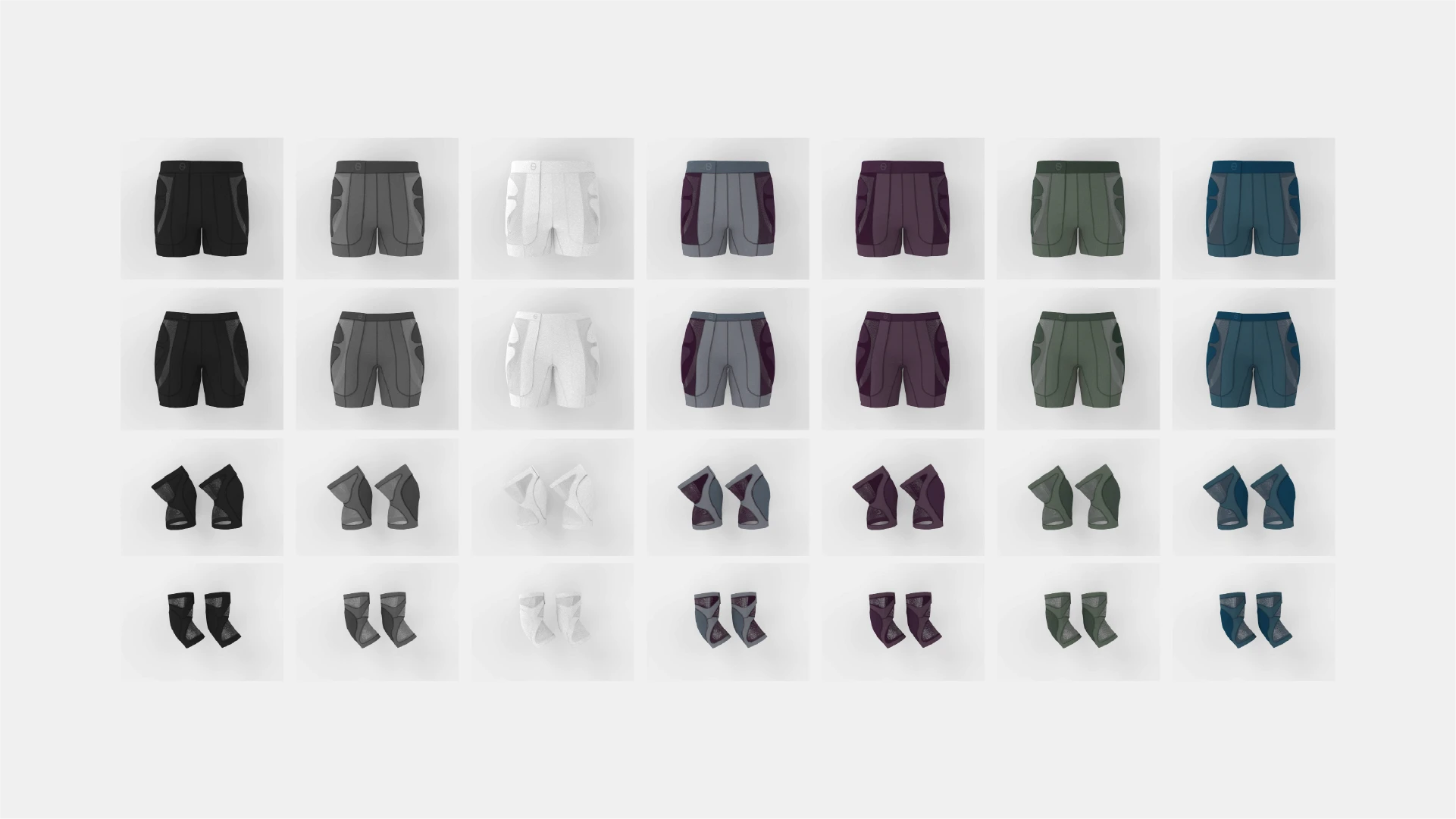
We addressed this by designing the protectors as wearable products that integrate into everyday clothing styles of the target group. A color range based on user preferences allows different expressions, helping users feel more comfortable wearing the product.
Outcome
SAFEEL got nominated for the Swiss Design Award in 2021.
It is a prototype-level product family combining protective performance with improved usability and a more approachable appearance, addressing both functional and emotional barriers that often prevent adoption.