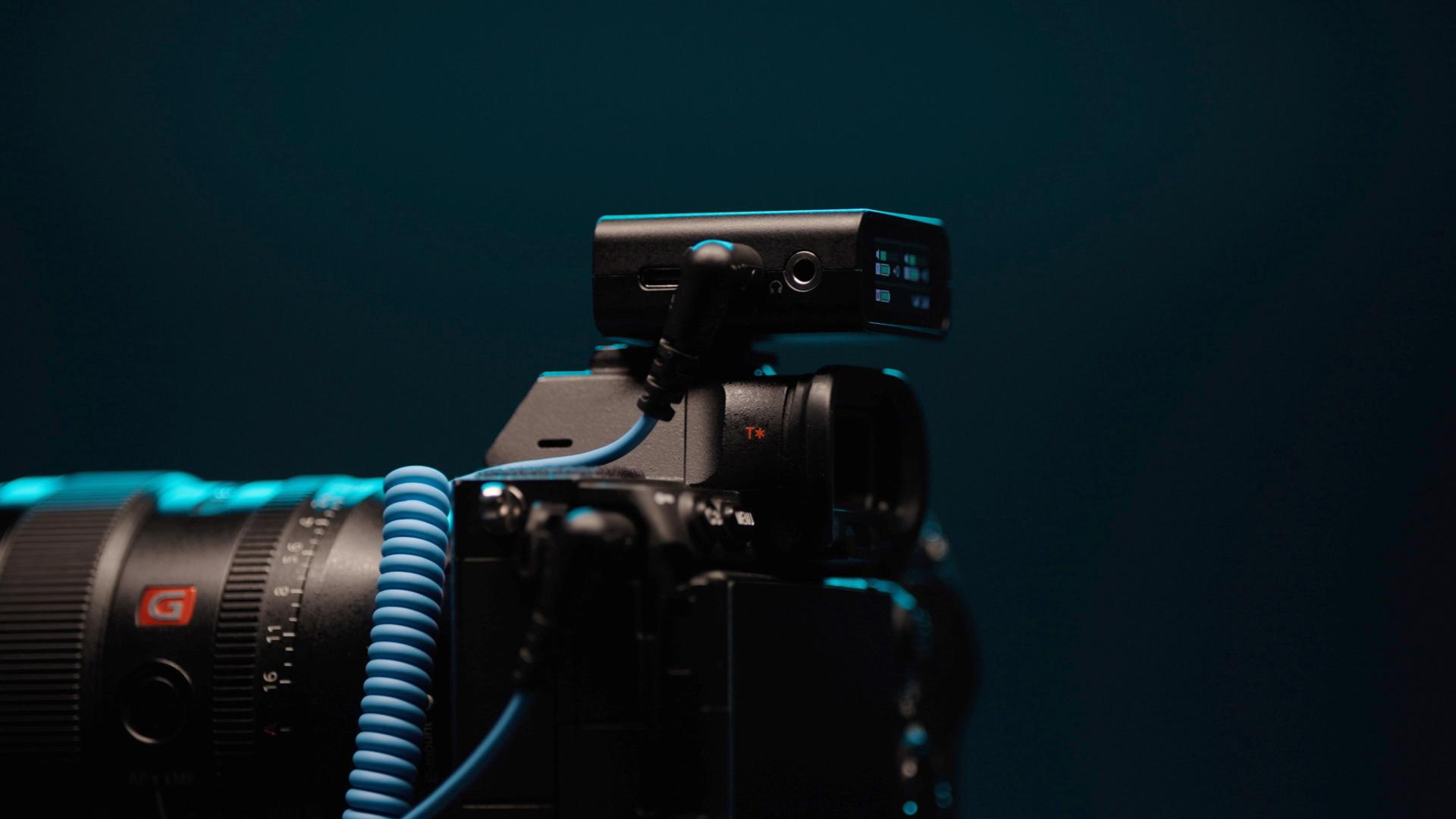
Profile Wireless 2-Channel Set
Wireless microphone system for different recording workflows
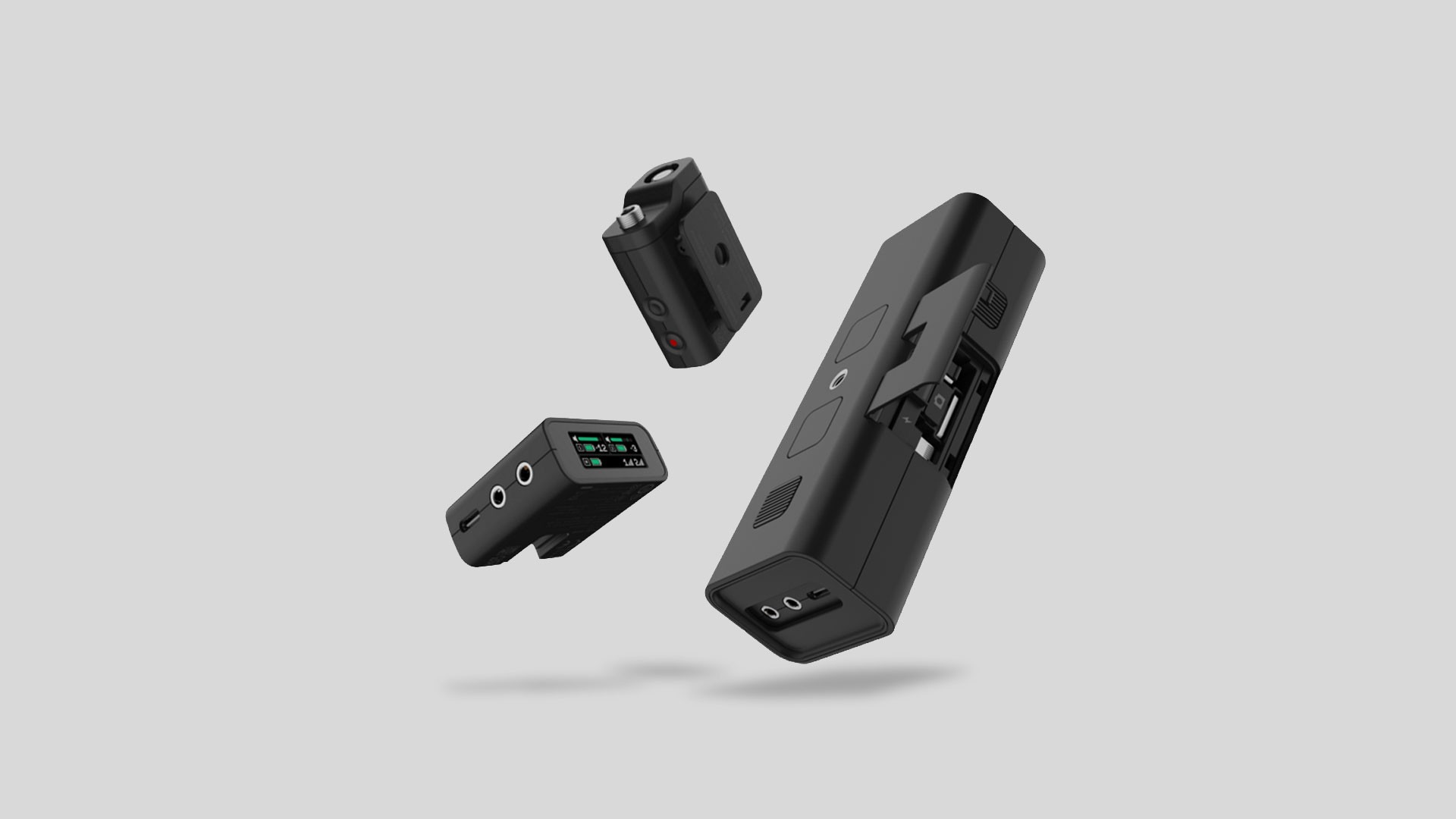
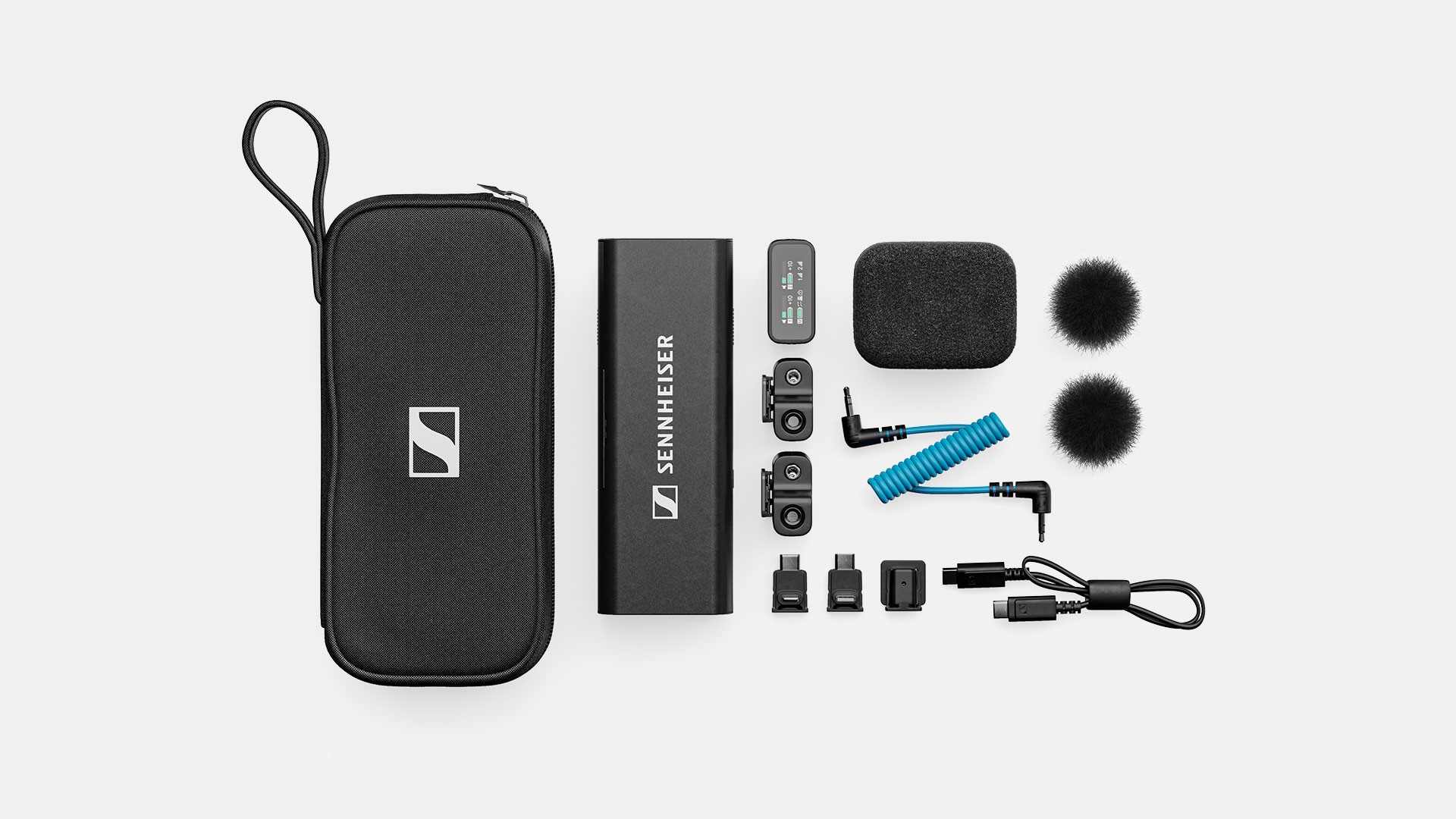
The Profile Wireless 2-Channel Set combines two transmitters, a touchscreen receiver, and a charging case into a connected product system. It allows creators to switch between recording setups without additional accessories.
Timeline
2022-2025 | 3 years
Client
Sennheiser
Role
UX, UI, Industrial Design
Tools
Miro, Figma, Rhino, Key Shot
Team
Industrial Design: Ralf Kittmann, Iwan Hänggi, Benjamin Josi | UI/UX Design: Arianna Agudio
Rights
This project was carried out at Notation Creative Consulting AG for Sennheiser. All rights belong to Sennheiser.
My Role
I led the project on the agency side across UX, industrial, and UI design. I collaborated closely with the internal team, our client and suppliers throughout the project.
My responsibilities included:
defining the overall design vision for supplier tendering
defining the interaction architecture across devices
designing the UI and navigation concept for the receiver
ensuring consistent behavior across screen, buttons, and LEDs
supporting implementation of both physical and digital design
Context
Sennheiser aimed to expand into the content creation market with a system tailored to novice users.
The goal was to combine professional audio quality with everyday usability. The system needed to support recording across multiple devices without requiring complex setup or additional accessories.
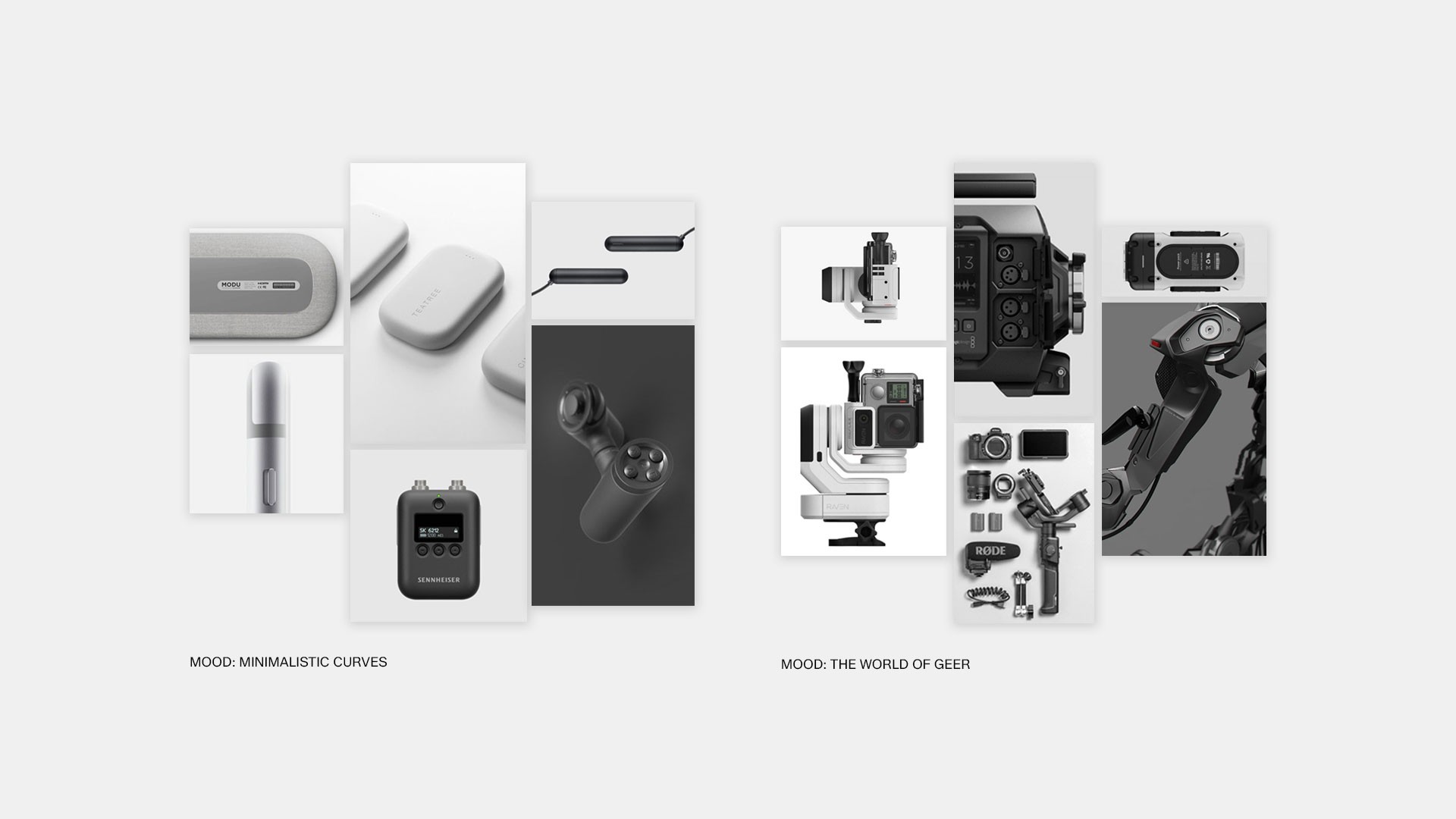
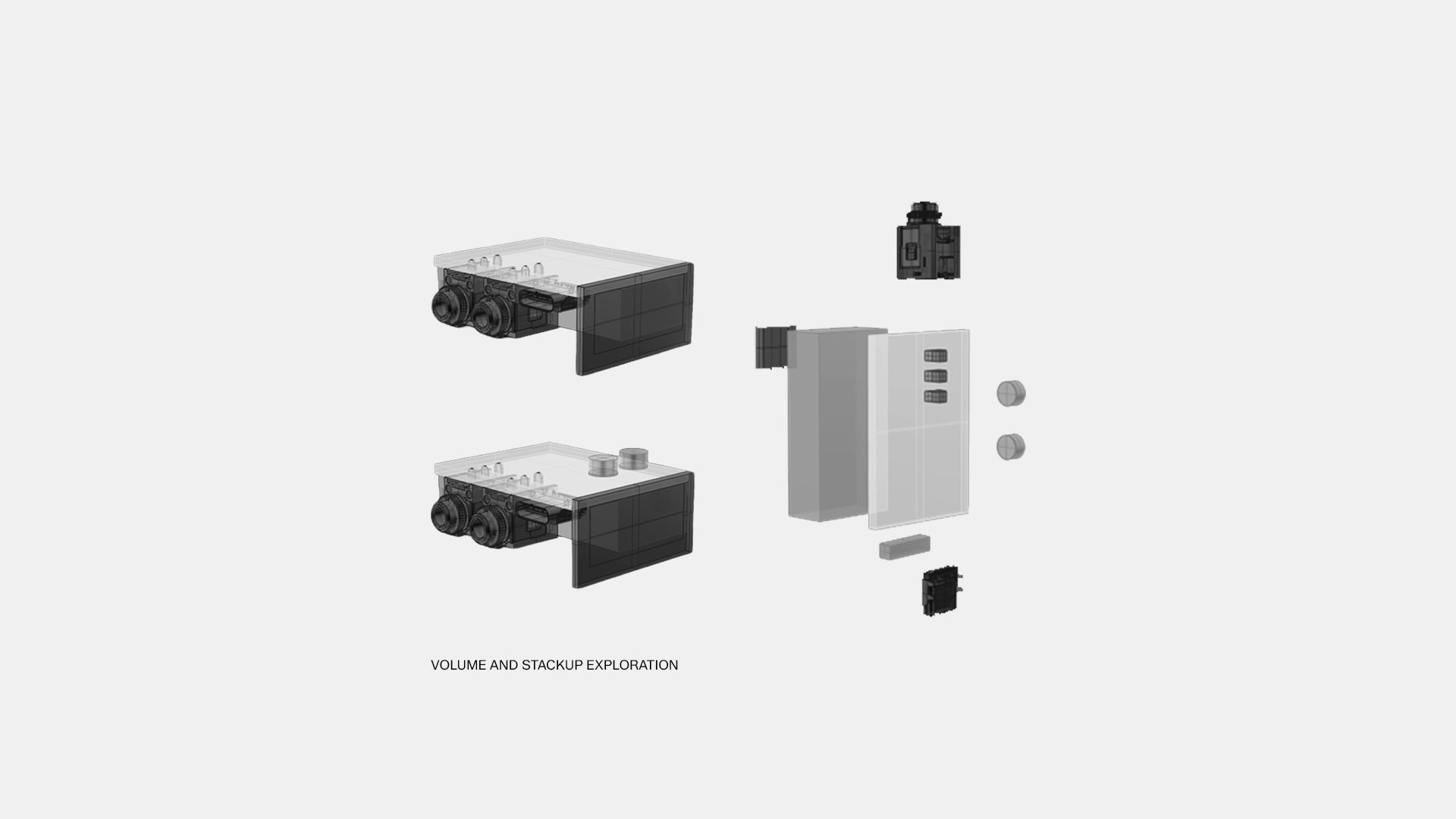
From an industrial design perspective, the product had to be as compact and lightweight as possible while aligning with Sennheiser’s design language and introducing touchscreen control for the first time in the product portfolio.

Challange
Content creators move between cameras, smartphones, and standalone recording. Within a single session, the setup can shift from a structured two-person recording to spontaneous handheld interviews. Each scenario introduces different requirements for mounting, interaction, and feedback.
Miniaturization added further constraints. The reduced physical size limited available space for interaction, making it critical to decide what information is essential at any given moment and how it should be communicated.
Every additional feature increased system complexity. A change in one device affected the behavior of the others, both physically and digitally.
Approach
The project required parallel progress across industrial design, UX, and UI, with early time pressure on the industrial design vision to support supplier tendering.
Even though time pressure could make it tempting to directly jump into the ideation, we first defined how the system should behave as a whole. This helped avoid misalignment between physical and digital interactions later in the process. Our first step, therefore, was translating the clients' user research and provided personas into tangible design requirements.
With this system-level definition in place, the project progressed in parallel across physical and digital design. This ensured that decisions on form, interaction, and feedback remained aligned throughout ideation, testing, and refinement.
Process Insights
Turning a necessity in to user value
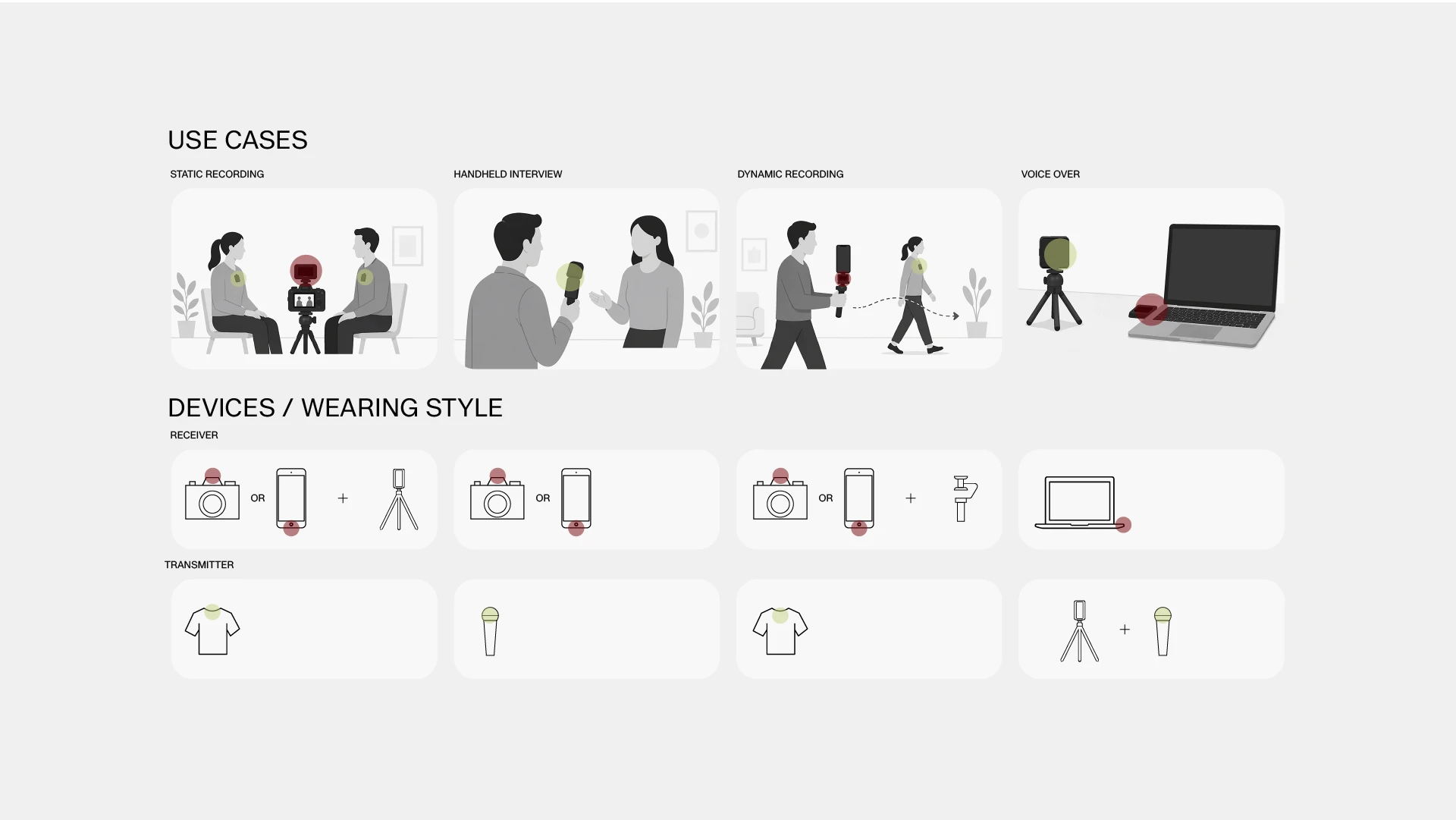
Mapping user journeys and recording scenarios revealed a recurring switch from two-person setups to handheld interviews. Existing systems typically require additional accessories for this transition.
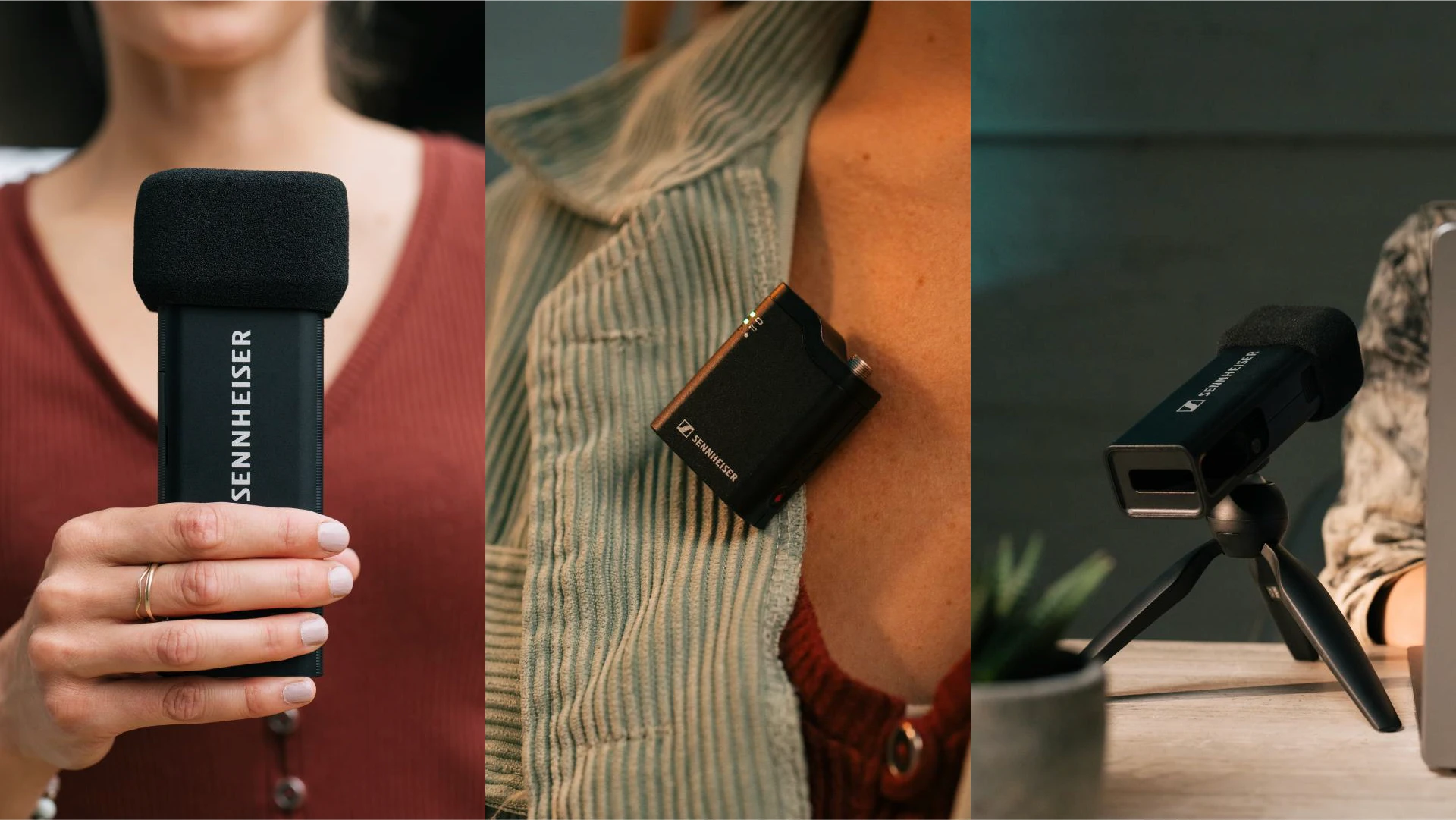
Instead of adding another component, we extended the role of the charging case. Originally designed for storage and power, it was developed into a handheld microphone, enabling this use case without the need of additional accessories.
Designing for multiple recording setups
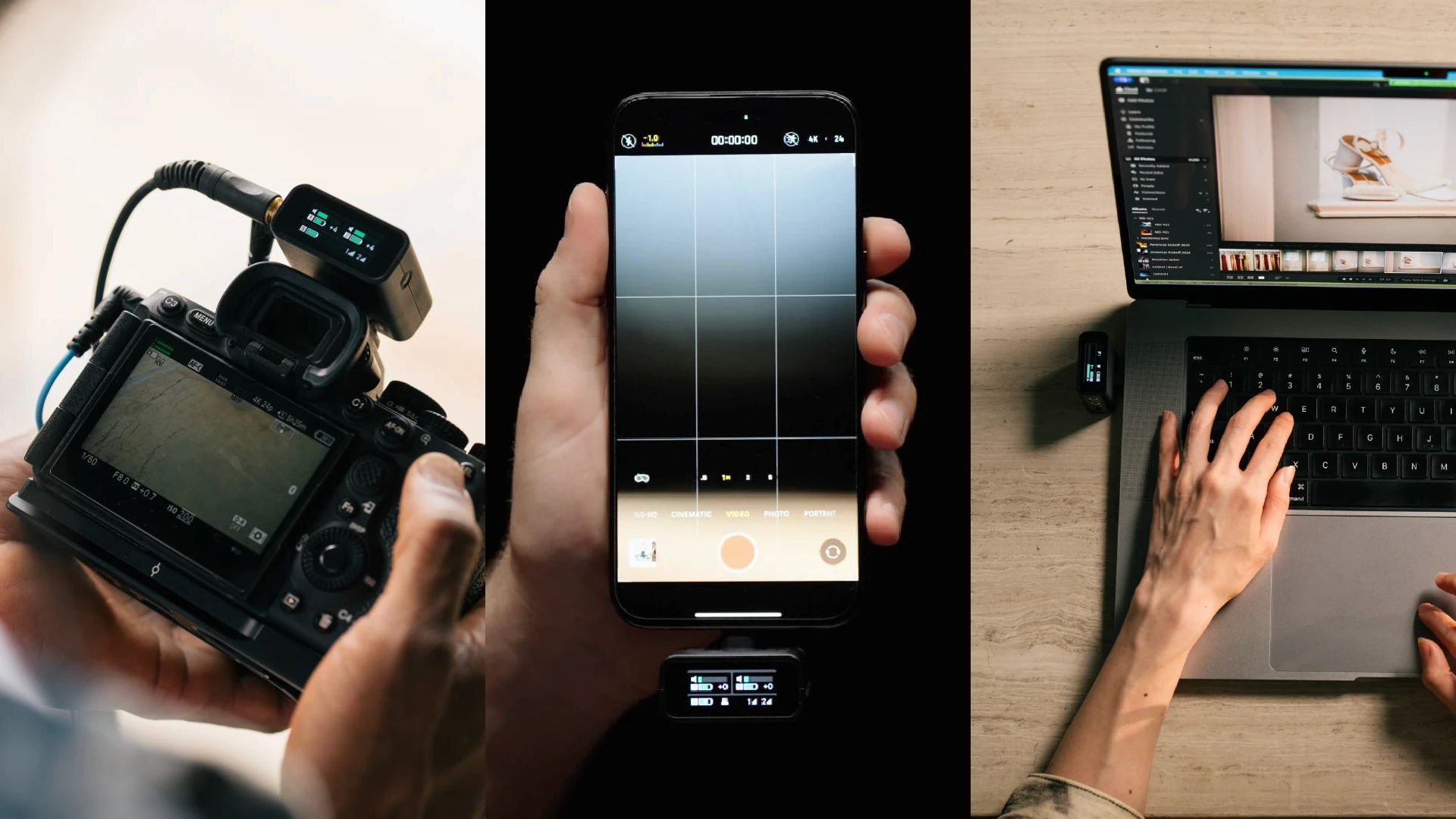
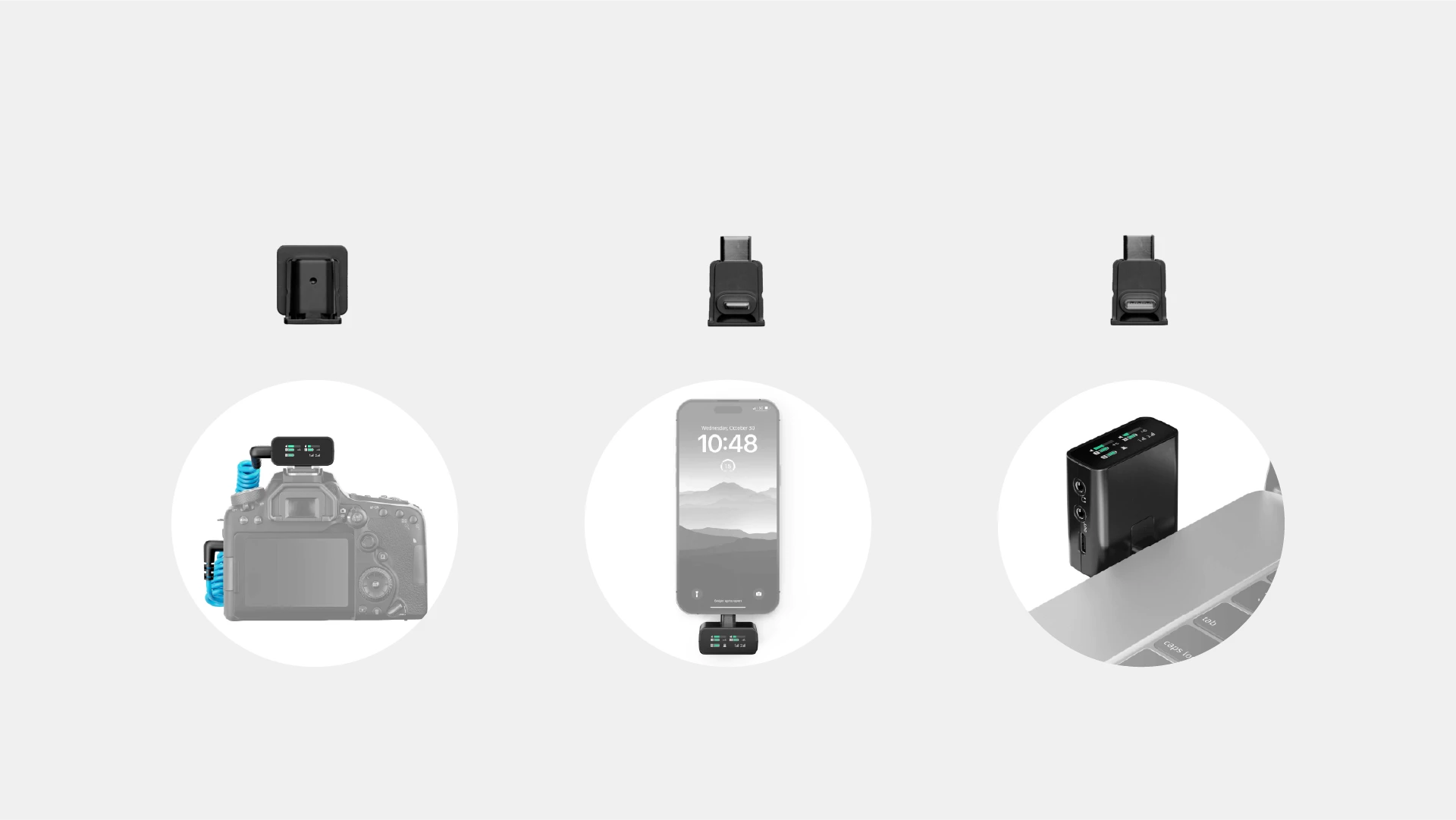
The use case mapping showed the complexity of the recording setups' requirements. The system needed to work across cameras, smartphones, and standalone recording, each requiring different mounting and connection setups.
We addressed this by introducing a modular adapter mounting approach for the receiver. With the slide-on adapters, it connects to different devices, while the transmitters adapt to various wearing styles through clip and magnet solutions.
Structuring clarity on a minimal interface
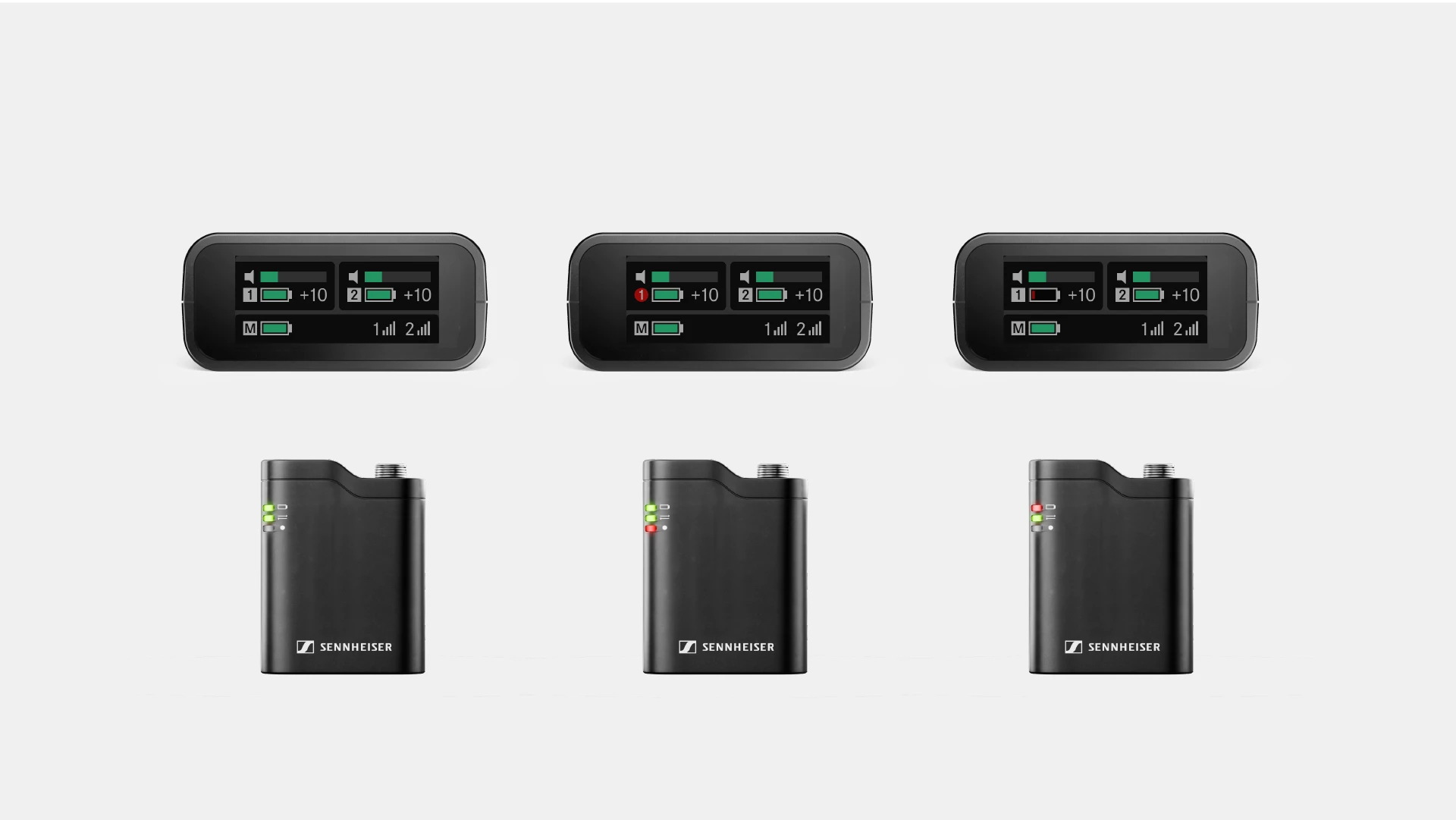
The receiver acts as the control center, but its size severely limits available interface space. To maintain clarity, we structured the interface around one key question:
Is the system ready to record?
This led to a strict prioritization of information. Only essential states such as audio levels, battery, connection, and recording are visible, while the layout adapts depending on the number of connected transmitters. This same principle also informed the LED logic on the transmitters, ensuring consistent system feedback across devices.
Designing navigation for easy learnability
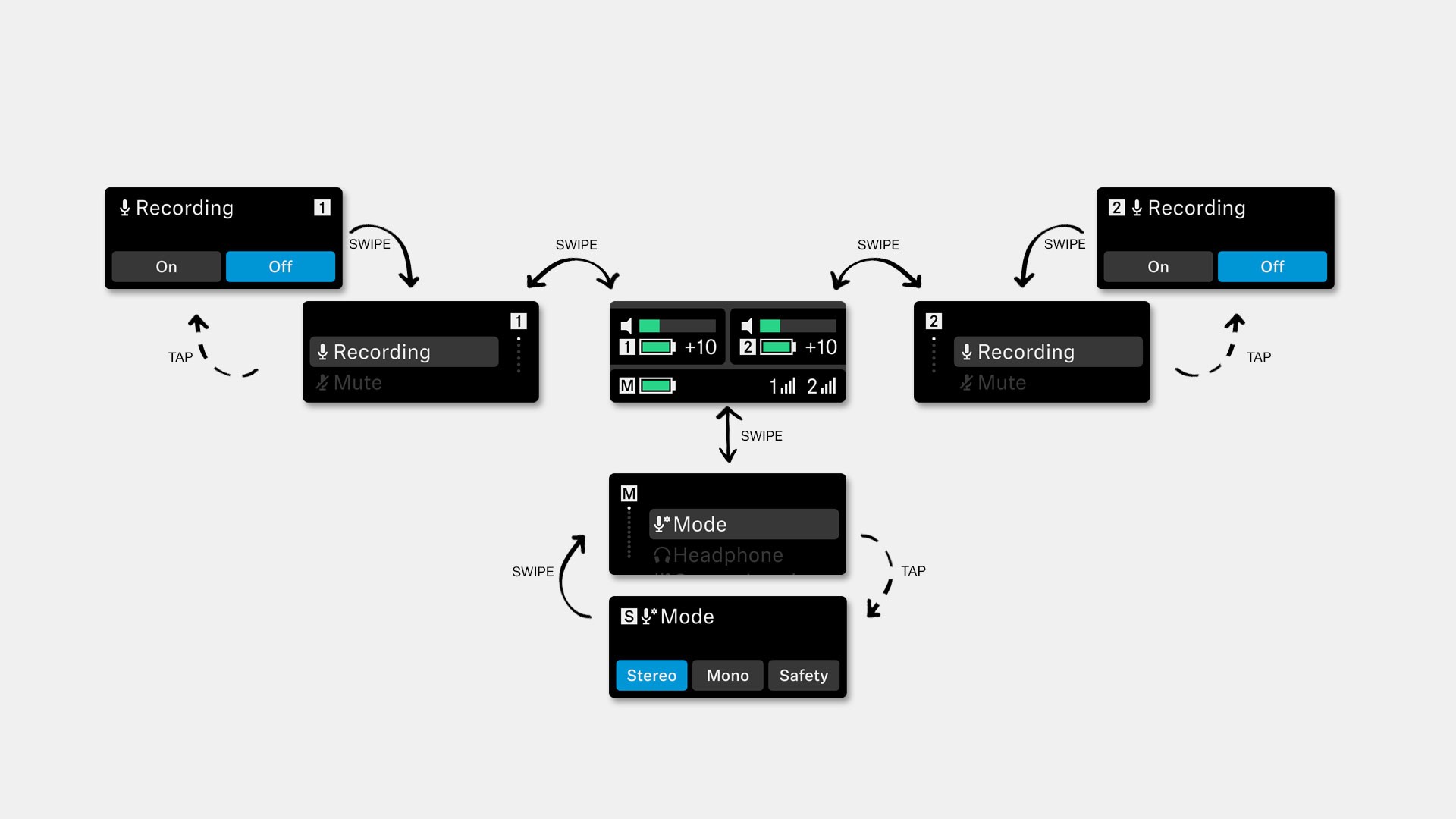
Operating within a small screen required a clear and predictable navigation model. We introduced a spatial navigation concept based on simple gestures. Users swipe between dashboard and device menus and tap to confirm actions. While not immediately obvious, this structure follows a consistent spatial logic that can be learned quickly.
To validate this approach, we tested interface elements using scaled physical mockups and conducted task-based user testing. The results showed that users were able to understand the navigation and operate the system confidently after a short learning phase.
Reducing complexity through a flat architecture
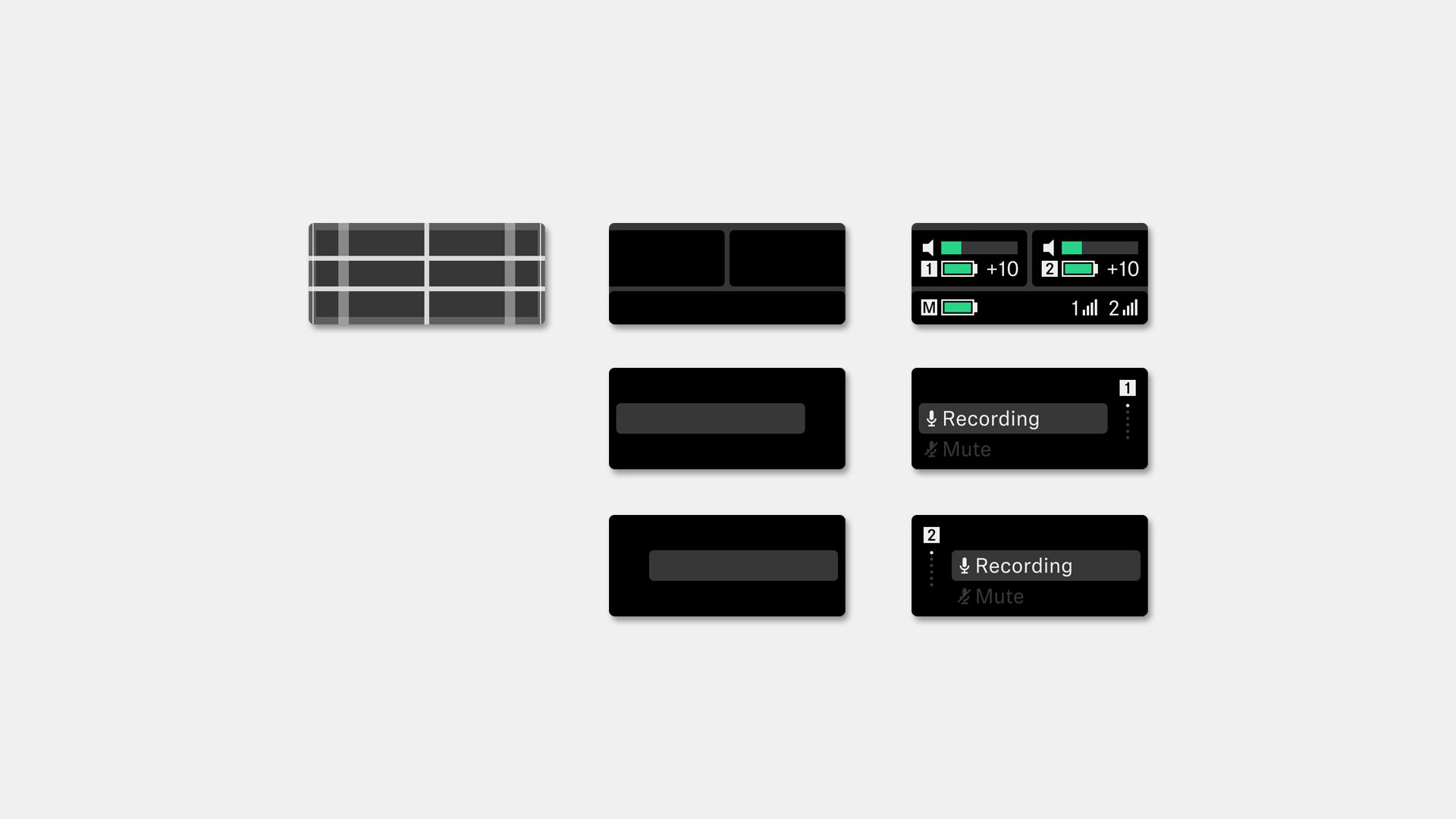
A heuristic analysis of competing touchscreen systems showed that multi-layered menus often create confusion in navigation and orientation.
To address this, we structured the system around device-specific, single-layer menus. Menu items are organized based on frequency of use, making common actions directly accessible without navigating through nested levels.
Outcome
The final product enables creators of different experience levels to operate a professional audio recording system with minimal setup.
The receiver can be mounted to cameras and smartphones or used for standalone recording. Transmitters support different attachment methods through clip and magnet solutions, while the charging case enables additional scenarios such as handheld interviews and tripod-based recordings.
The system is now available on the market as part of Sennheiser’s Profile Wireless line.