CoffeeB Retail System
Scalable retail system for launching a sustainable coffee brand
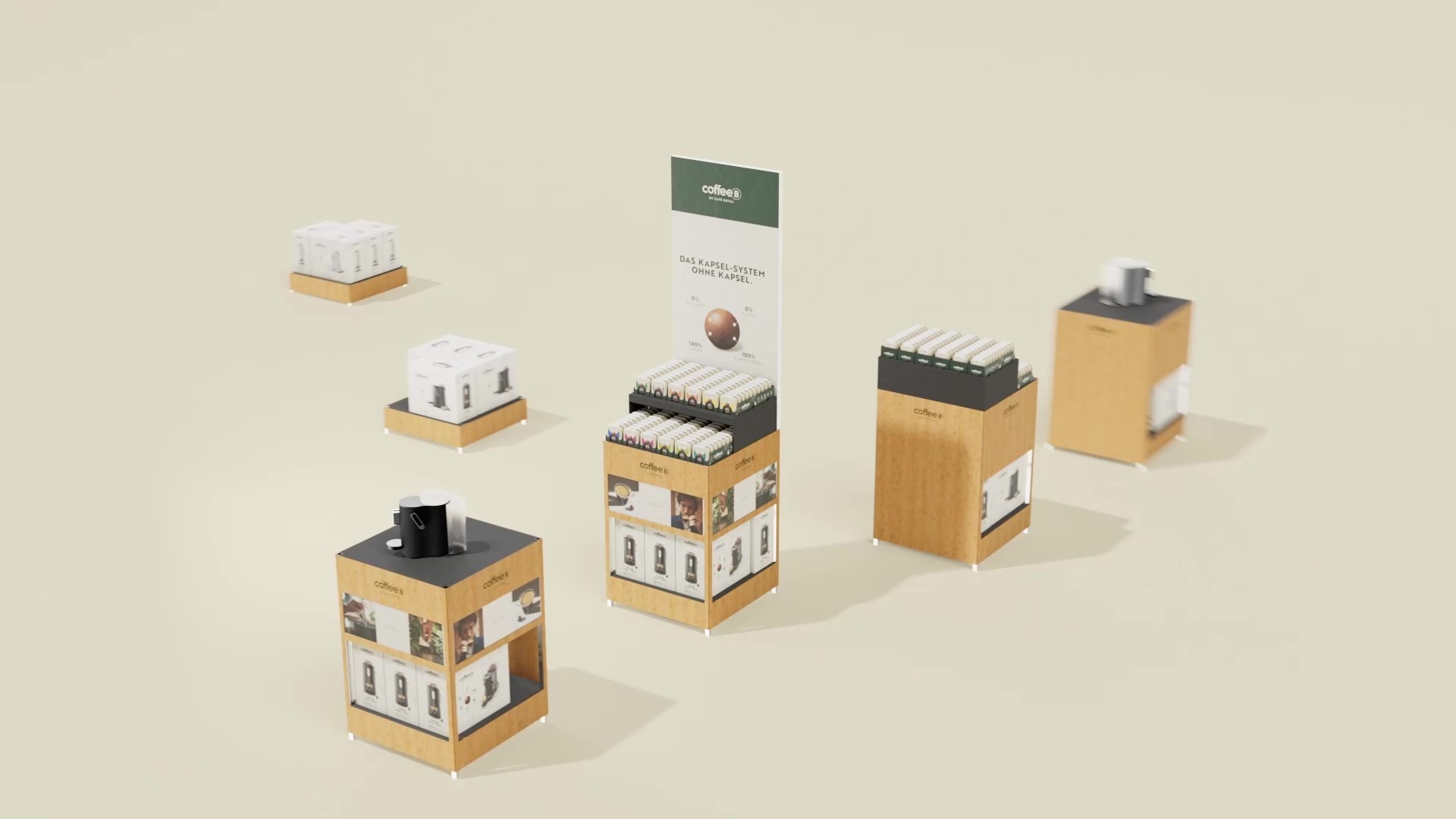
CoffeeB is a capsule-free coffee system developed by Delica. For its market launch, we designed a modular retail system that translates the product, brand, and sustainability narrative into physical spaces across different store environments.
Timeline
2021-2022 | 1 year
Client
Delica
Role
Industrial Design, Retail Experience
Tools
Rhino, Keyshot, Adobe Suite
Team
Stefan Koller, Benjamin Relly, Alexander Häberlin
Rights
This project was carried out at Notation Creative Consulting AG for Delica. All rights belong to Delica.
My Role
I co-led the design of the retail system and brand spaces together with Stefan Koller on the agency side. During implementation, we coordinated between stakeholders and ensured design consistency through to production.
My contribution focused on:
defining and applying the overarching design system across all formats
translating initial furniture concepts into a scalable retail language
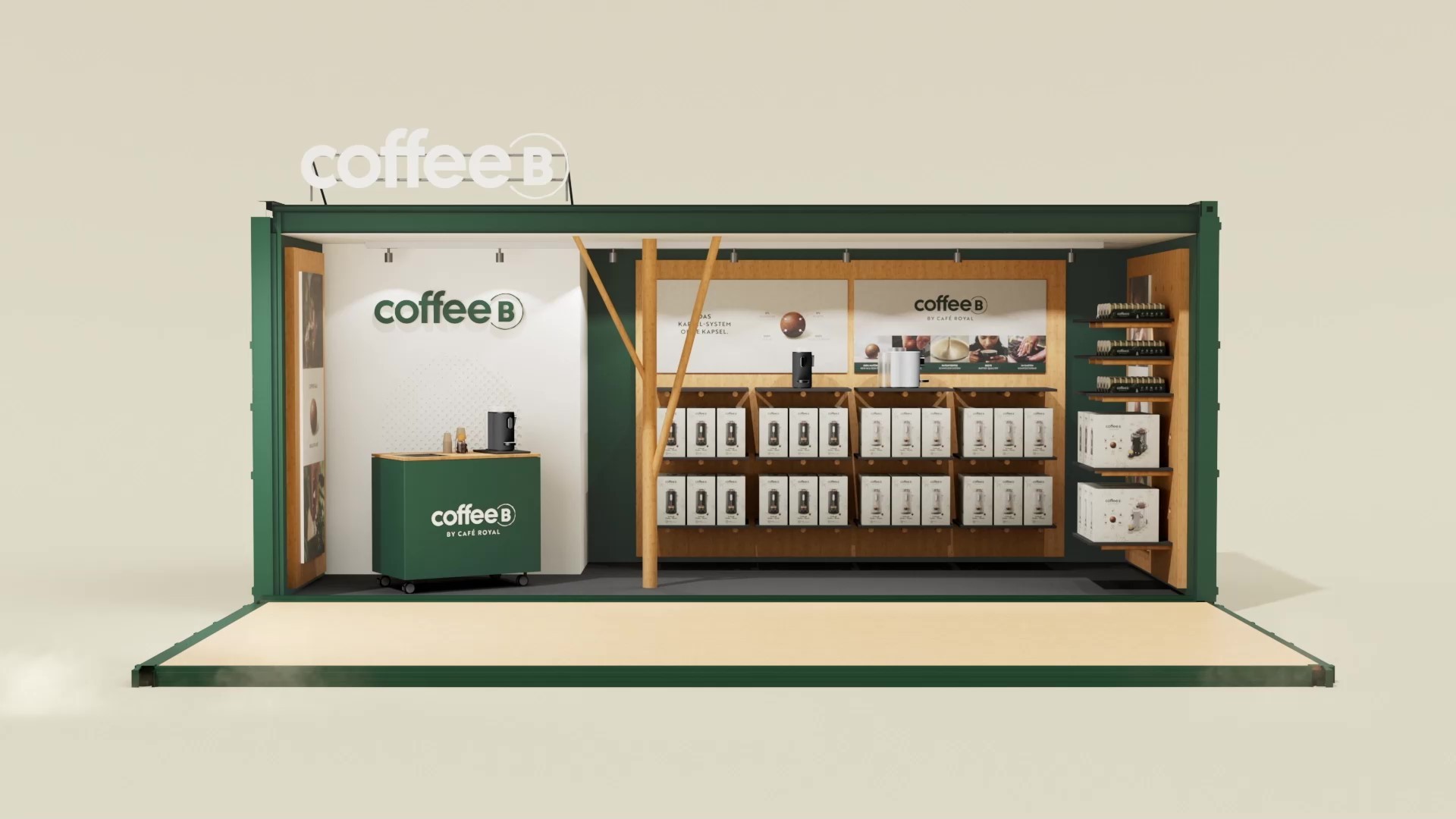
designing larger brand spaces including flagship, mall installations, and pop-ups
aligning design decisions with clients and suppliers during implementation
supporting prototyping, detailing, and rollout across stores
Context
CoffeeB planned to introduce a new type of sustainable coffee system. As a new product category, it required not only visibility in retail but also explanation and trust in its sustainability promise.
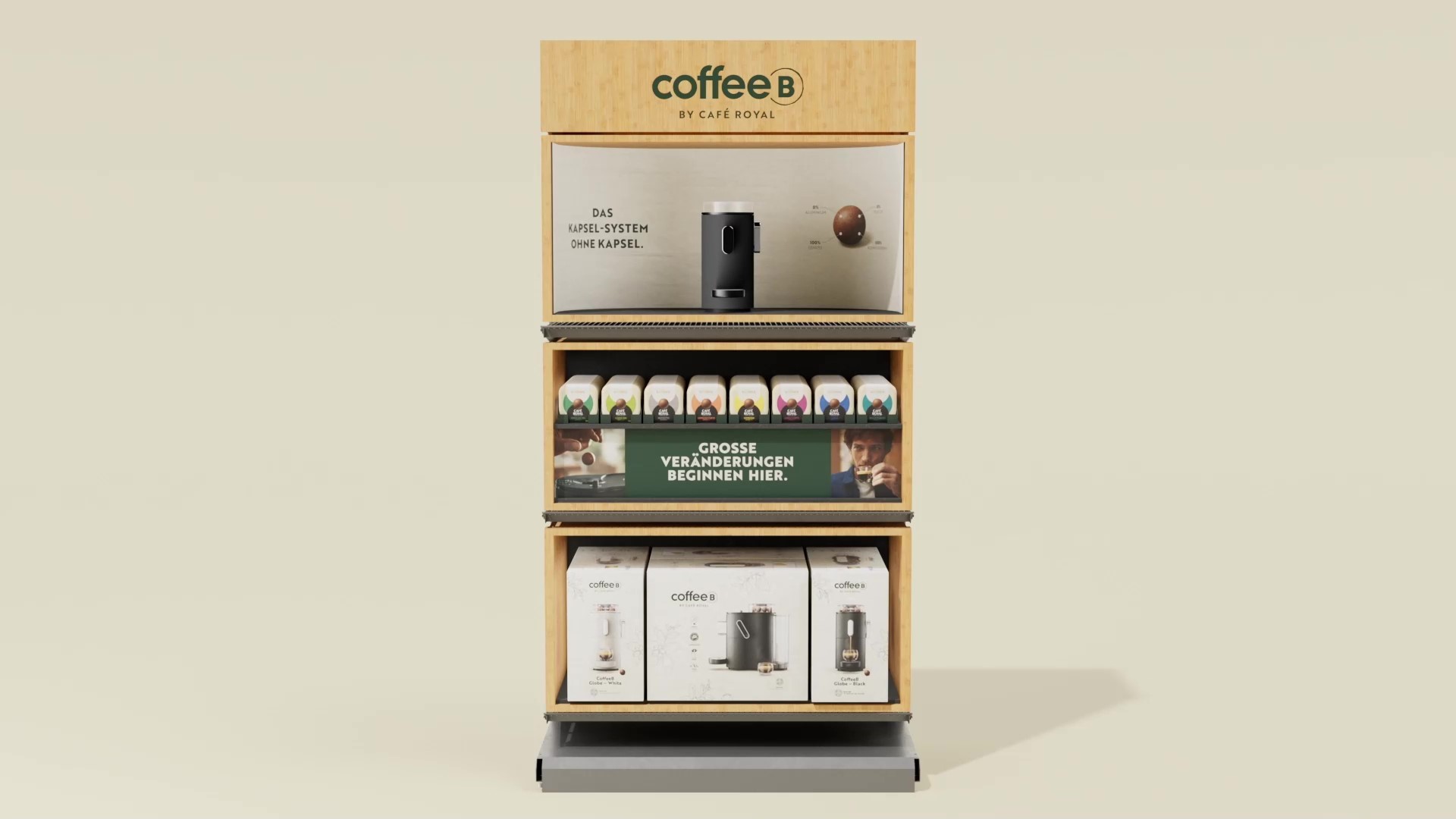
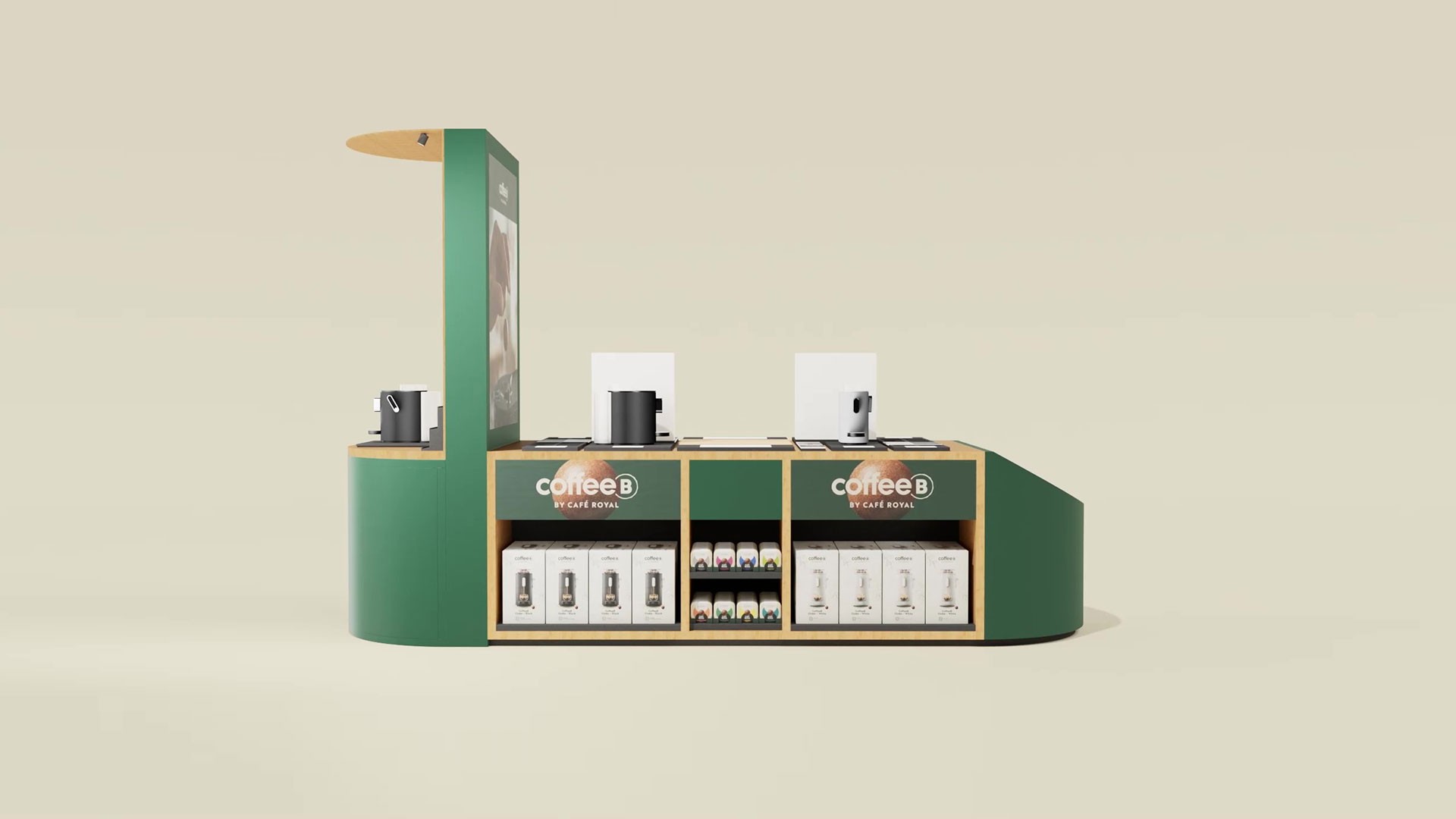
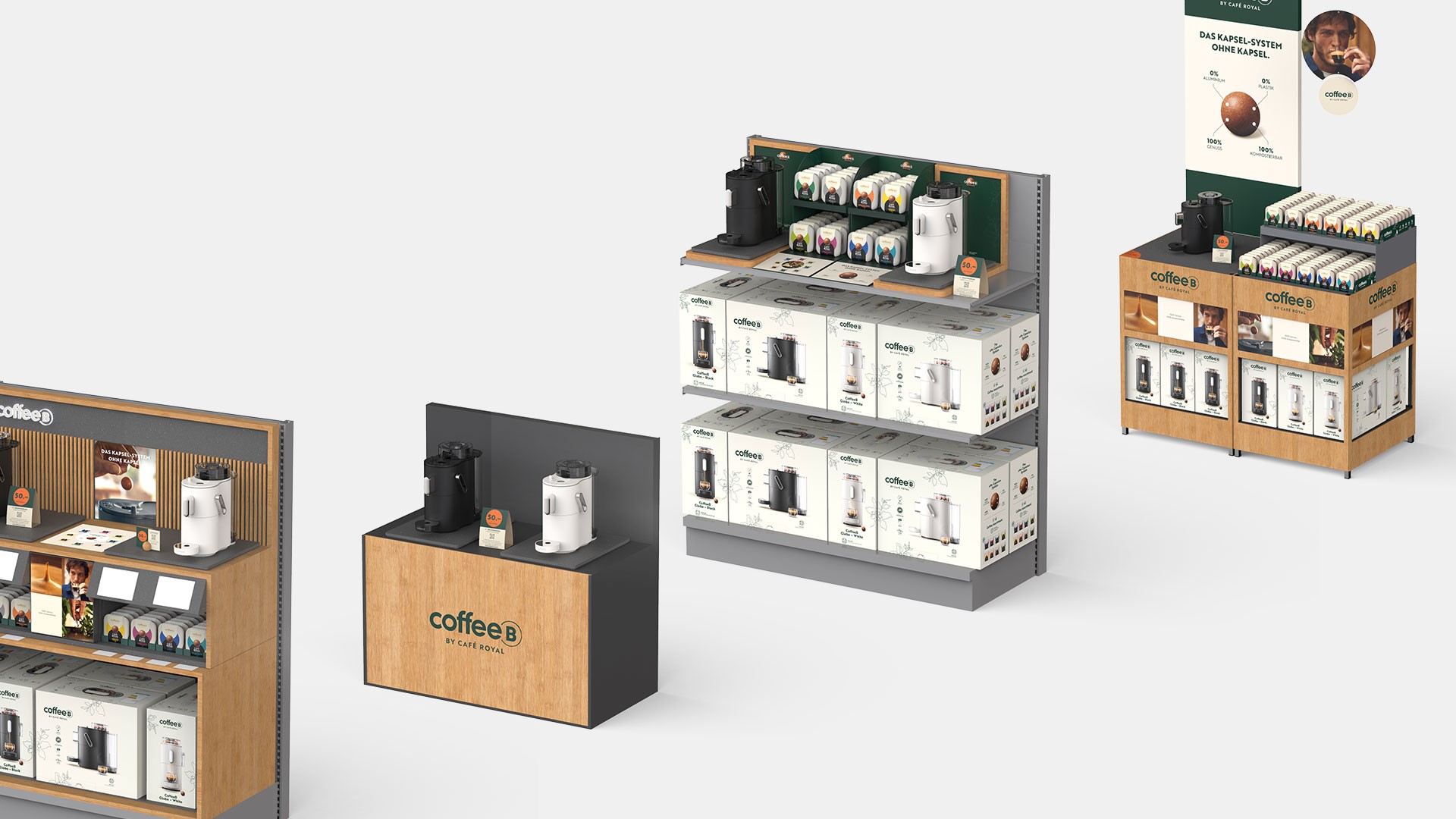
The launch was planned across a wide range of retail environments, from existing shelves to dedicated in-store furniture and larger brand installations. Each format played a different role in presenting the product and required a tailored spatial solution.
Challenge
Each store format came with different spatial constraints, installation conditions, and levels of brand presence. At the same time, the system needed to combine product presentation, communication, tasting, and storage in a consistent way.
The main design challenge therefore was balancing flexibility for different store requirements with a clear and recognizable brand expression while staying cost-efficient and aligned with sustainability expectations.
Approach
The project followed a structured development process, moving from system definition to implementation.
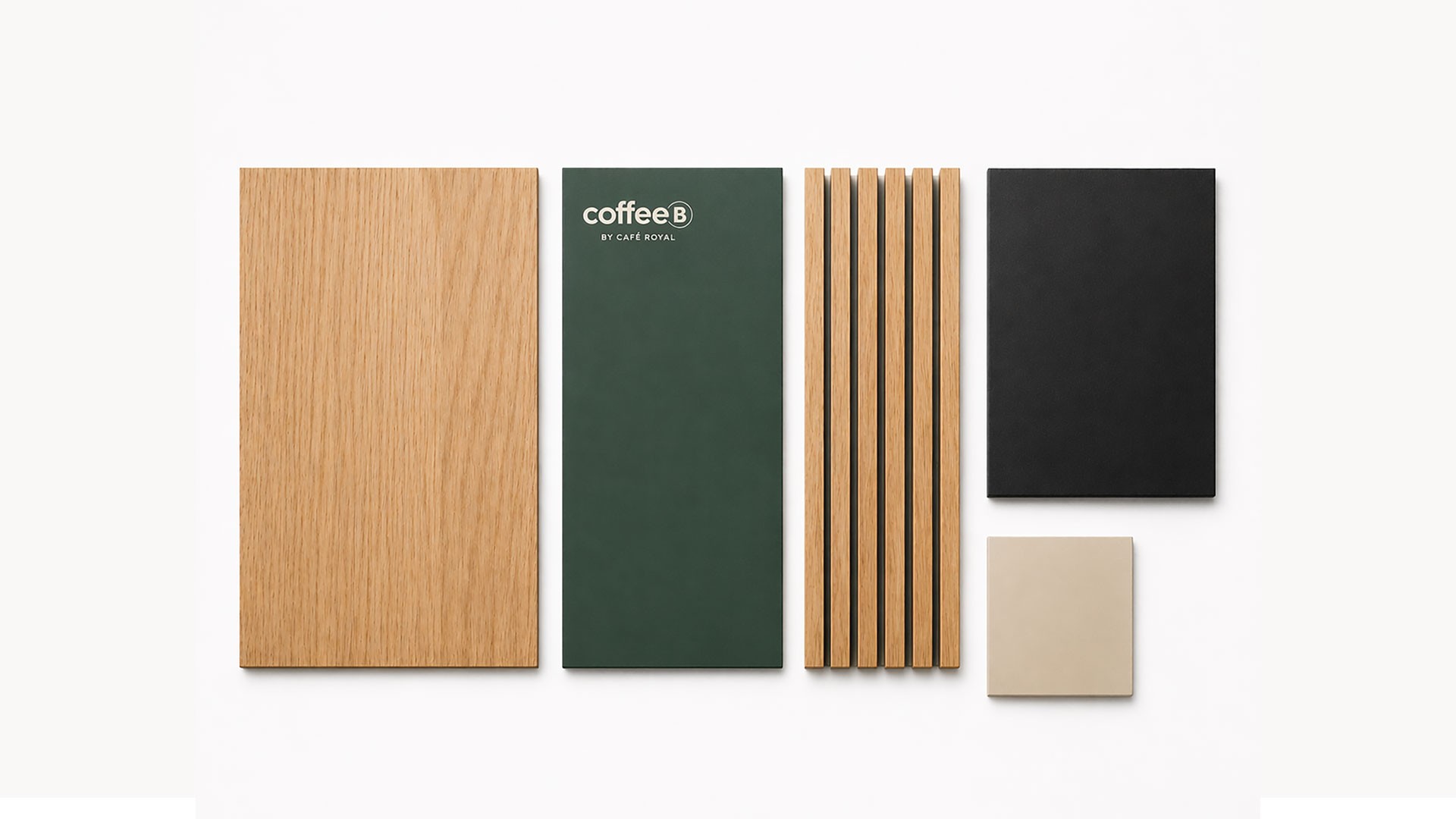
Building on two initial furniture concepts, we first defined the visual and structural design principles. This included material, color, and clear rules for how products are presented.
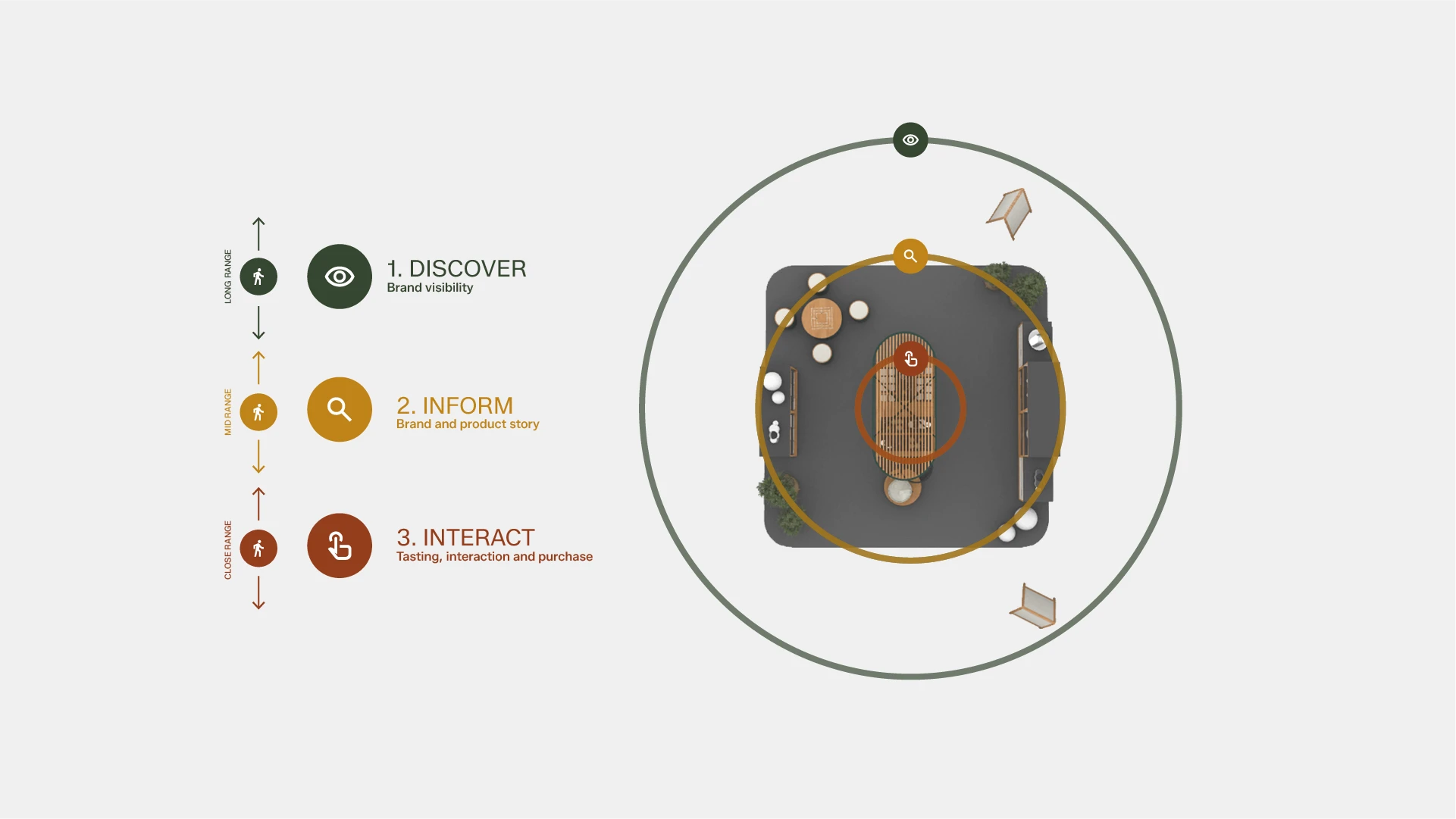
With this system in place, we expanded it across all retail formats. Based on a high-level customer journey, we structured the spaces into layers of communication, product presentation, and interaction, ensuring consistency while adapting to different store conditions.
Process Insights
Creating a system instead of individual furniture pieces
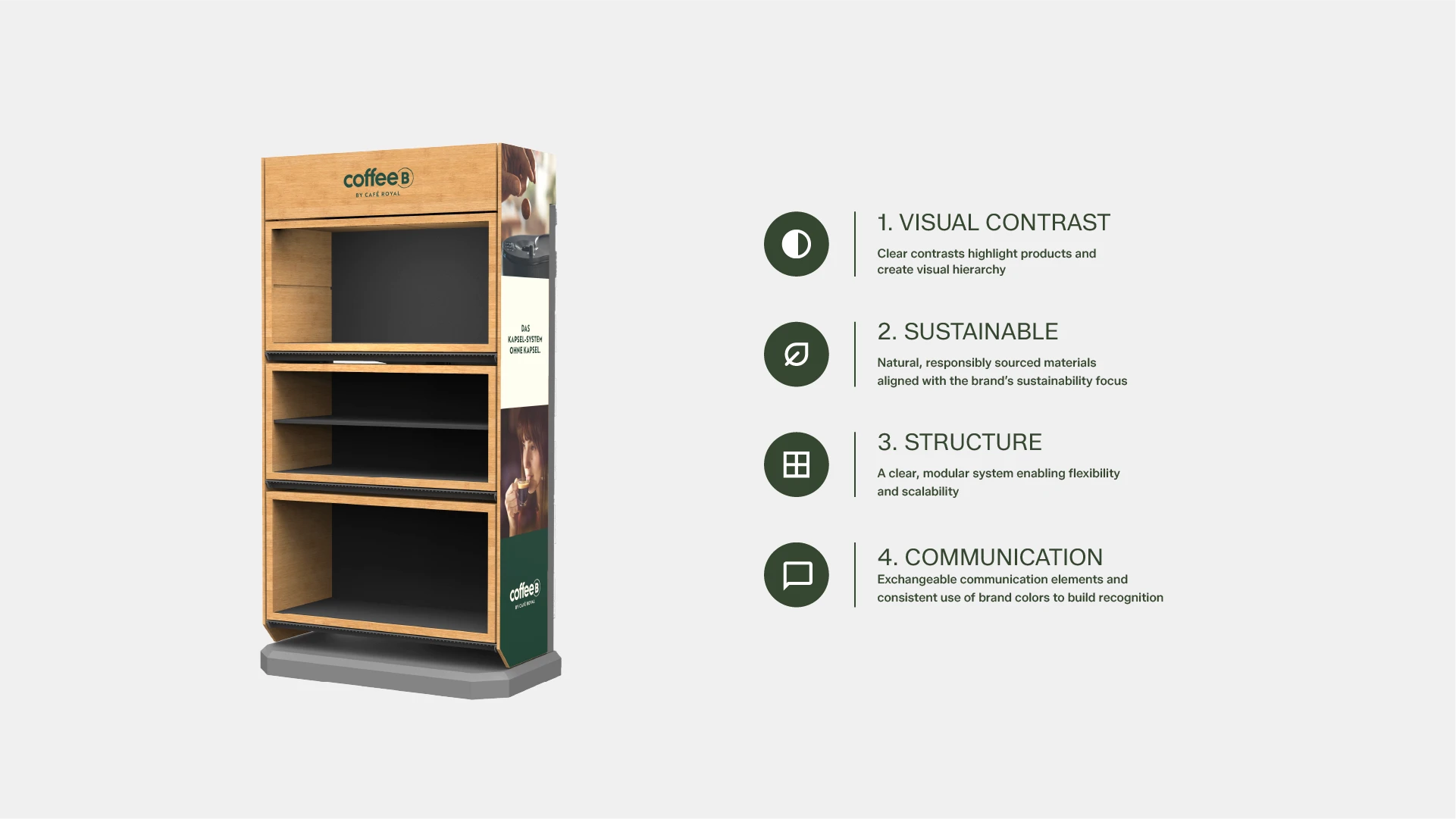
To avoid inconsistencies between different stores and furniture formats, we shifted the focus toward defining high-level design rules that could be applied across all environments.
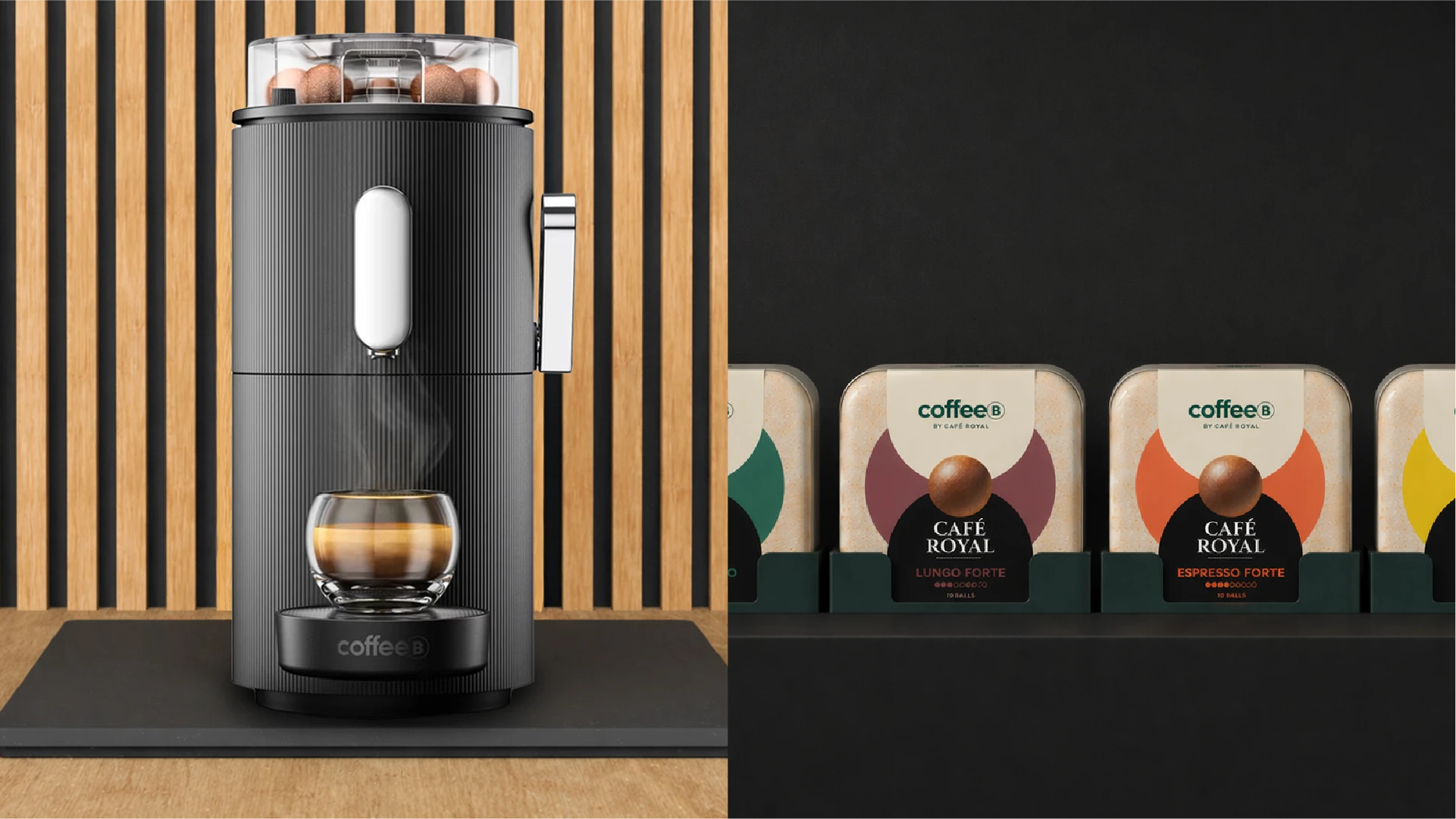
This included a clear visual and structural logic. Material contrast was used as a recognizable presentation principle across all touchpoints, with machines and packaging consistently placed on darker surfaces to improve visibility, while the brand colors are used to enhance brand recognizability in combination with wood.
Adaptable furniture through modular design
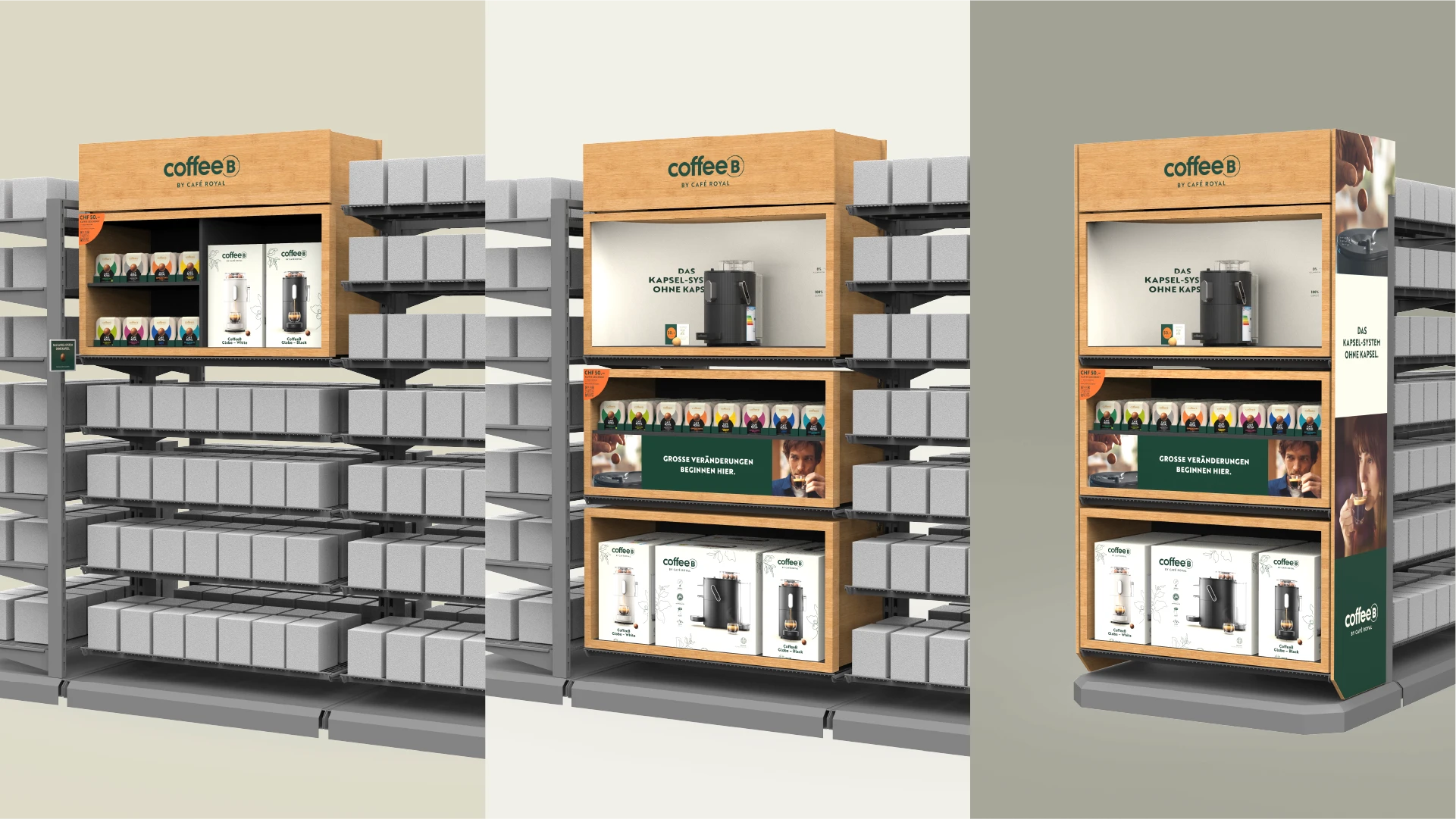
Modularity was a practical response to varying store conditions. The main Migros furnitures were designed as repeatable units that could be combined, reduced, or extended depending on available space.
At the same time, internal components could be adapted to switch between product display, communication, and storage, allowing each installation to respond to its specific context without changing the overall system.
Structuring the experience through spatial hierarchy
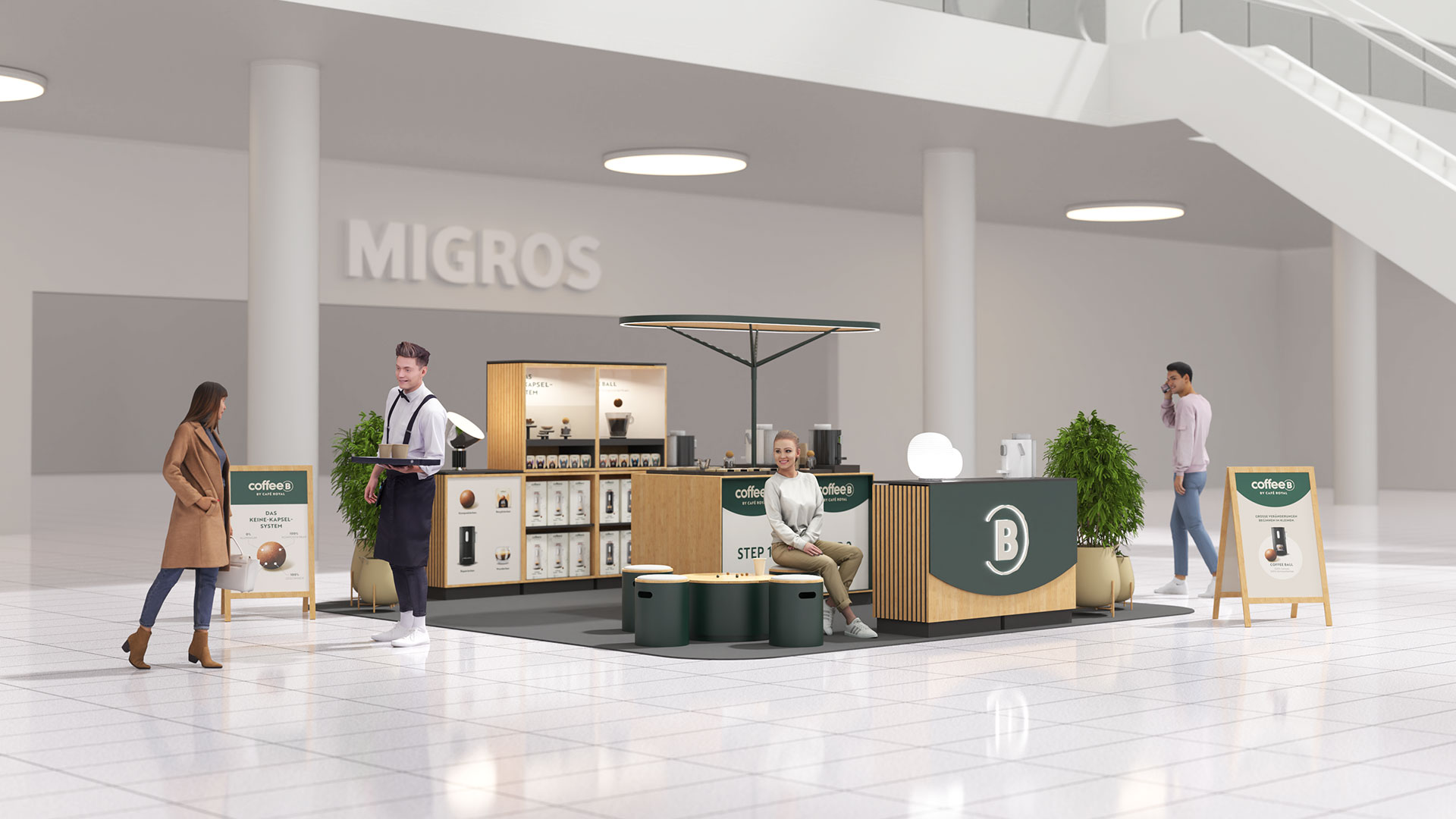
Mapping the customer journey across the customer approaching distances helped define how the system communicates at different levels. Brand visibility operates at long range, product understanding at mid-range, and interaction at close range.
This structure guided how elements are positioned and combined, especially in larger installations where discovery, education, tasting, and purchase needed to work together as one experience.
Outcome
The project resulted in a retail system used for the Swiss-wide launch of CoffeeB.
It includes shelf integrations, in-store furniture, and larger brand environments such as pop-ups and mall installations. Across all formats, the system provides a consistent visual identity while supporting product communication, tasting, and sales.
The result is a scalable framework that allows the brand to appear coherent across very different retail contexts.